

8 things your father could do with his hands that nobody under forty can replicate — sharpen a knife on a whetstone, rewire a lamp, patch drywall, tune a carburetor — and the reason losing those skills matters isn’t practical, it’s that each one was a conversation he knew how to have with the world that the world stopped speaking


Last weekend, I found myself standing in my garage, holding my father’s old whetstone.
It was worn smooth in the middle from decades of use, and as I ran my thumb across its surface, I realized I had no idea how to use it properly.
My father could bring any blade back to life with that stone, but somewhere between him and me, that knowledge just… evaporated.
It got me thinking about all the things our fathers’ generation could do with their hands that most of us can’t even attempt.
And before you roll your eyes thinking this is another “kids these days” rant, hear me out. The real loss isn’t about the skills themselves. It’s about something deeper.
1) Sharpen a knife on a whetstone
My father would sit at the kitchen table with his whetstone, a cup of water, and whatever knife needed attention.
The rhythmic scraping sound was almost hypnotic. He knew the exact angle, the right pressure, the perfect number of strokes on each side.
Today? We buy new knives when the old ones get dull, or maybe we have one of those electric sharpeners that does all the thinking for us. But using a whetstone wasn’t just about maintaining tools.
It was about understanding that things could be restored, that patience and technique could bring something back from the brink. It was a meditation on care and maintenance that we’ve replaced with disposal and replacement.
2) Rewire a lamp
Ever watch someone from that generation fix a lamp? They’d unplug it, take it apart like they were defusing a bomb, and actually understand what they were looking at.
Strip the wires, connect them properly, test it, and boom – working lamp.
These days, if a lamp stops working, it goes to the curb. But rewiring taught something crucial: That the things around us aren’t mysterious black boxes. They’re puzzles we can solve.
When you can look at a broken object and see its potential for repair, you look at the whole world differently.
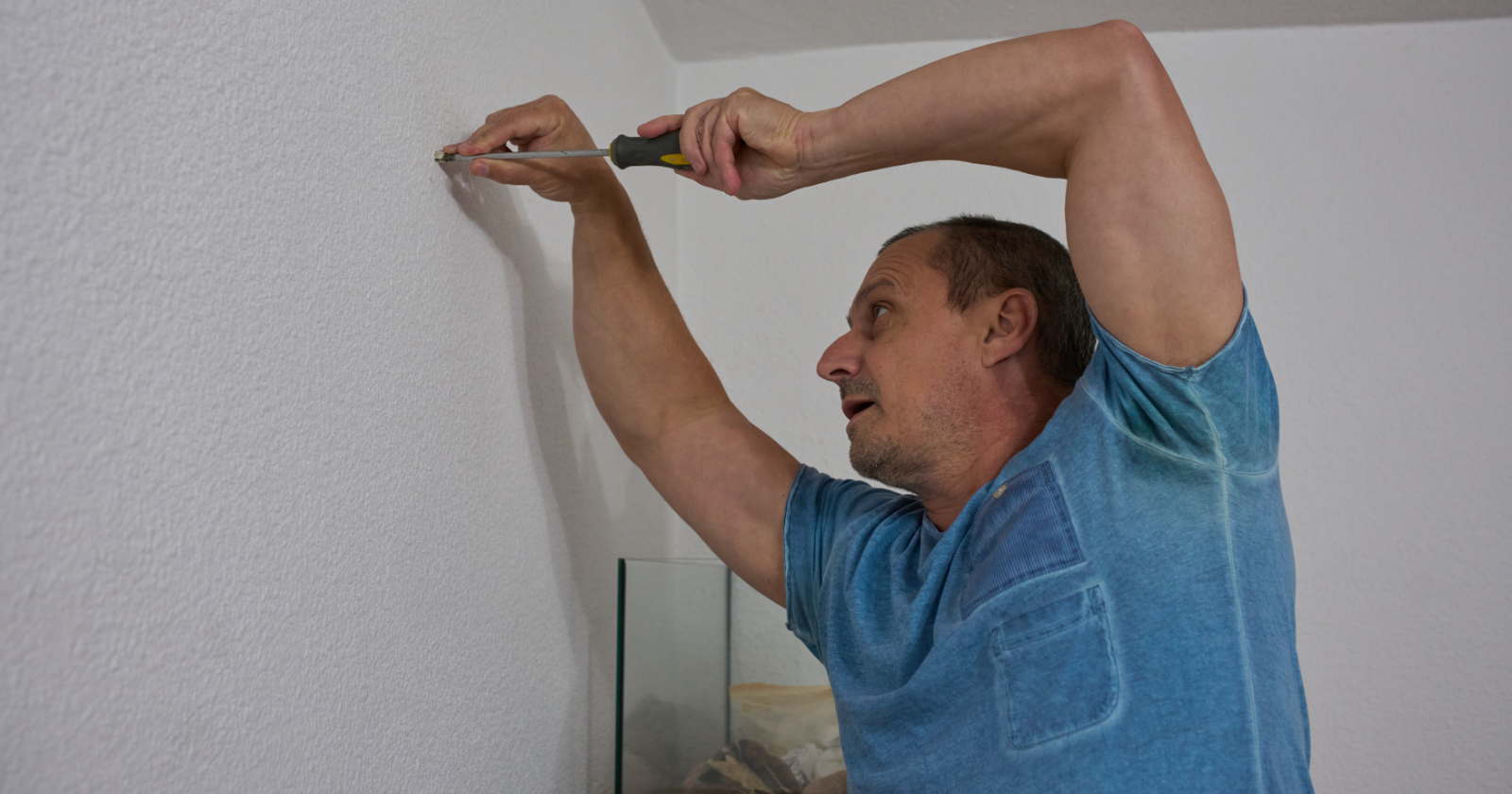
3) Patch drywall
My immigrant grandparents built their life from nothing, and part of that meant knowing how to maintain what little they had. Watching them patch a wall was like watching an artist.
They understood how to feather the edges, how to match textures, how to make the repair invisible.
Now we call someone, or we hang a picture over the hole and pretend it doesn’t exist.
But patching drywall was about more than home maintenance. It was about taking responsibility for your space, about understanding that homes require active participation, not just habitation.
4) Tune a carburetor
Remember when you could pop the hood of a car and actually see the engine? Not a plastic cover hiding everything, but actual mechanical parts you could touch and adjust?
Tuning a carburetor required understanding how air and fuel mixed, how tiny adjustments created big changes. It was detective work combined with mechanical sympathy.
You had to listen to the engine, feel its rhythms, understand its complaints. Modern fuel injection is undeniably better, but we lost that intimate mechanical relationship with our machines.
5) Read a paper map and navigate without GPS
This one might seem less “hands-on,” but unfolding a map, tracing routes with your finger, understanding scale and direction – these were tactile skills.
Our fathers could look at a map and build a mental model of the journey, understanding not just where to go but how the pieces fit together.
GPS tells us when to turn, but it doesn’t teach us where we are.
The old way forced you to understand your relationship to the landscape, to pay attention to landmarks, to actually know where you were going instead of just following orders from a phone.
6) Splice a rope properly
Not just tie a knot – actually splice rope to create a permanent loop or join two ropes together.
It required understanding the rope’s construction, how the fibers worked together, how to weave them back into themselves to create something stronger than the original.
We use zip ties and bungee cords now. Quick, easy, disposable. But splicing rope was about creating permanent solutions with simple materials. It was engineering at its most fundamental level.
7) Build a fire without accelerants
Sure, we can all squirt lighter fluid on some charcoal, but could you build a fire from scratch? Understanding kindling, tinder, how to stack wood for proper airflow, how to nurture a spark into a flame?
Building a fire the old way required patience and understanding of basic physics. It was problem-solving in real-time, adjusting your approach based on humidity, wind, and wood quality.
It connected you to something primal and essential.
8) Fix a running toilet
The mechanisms inside a toilet tank are actually pretty simple, but how many people would know where to start?
Our fathers understood float valves, flappers, and chain adjustments. They could diagnose the problem by sound alone.
When my elderly neighbors need help with small repairs like this, I often think about how these simple mechanical systems are becoming mysterious to most of us.
We’ve traded understanding for convenience, and something important got lost in that trade.
The language we stopped speaking
Here’s what I’ve come to understand, especially since taking up woodworking in retirement: These skills were more than just practical knowledge. They were ways of communicating with the physical world.
Each skill was a language, a way of understanding how things work, break, and can be fixed.
When you work with your hands, you develop an intuition about materials, about cause and effect, about problem-solving that no YouTube tutorial can fully replace.
You learn that things have weight, resistance, and grain. You understand that patience often works better than force.
My father worked double shifts at a factory, and his hands showed it. But those hands could also coax life back into anything broken, could build and repair and maintain.
Through his example, he taught me about work ethic, but I realize now he was teaching me something else too: That the world was knowable, fixable, improvable through skill and effort.
Teaching my three children to drive reminded me of this loss.
Each one required different approaches, different patience, but at least driving still requires some physical skill, some understanding of physics and space. But so much else has been automated, simplified, or simply abandoned.
Final thoughts
We’ve gained incredible things through technology and progress. I’m not suggesting we should all start churning our own butter.
But in losing these manual skills, we’ve lost fluency in the physical world. We’ve become tourists in our own lives, dependent on specialists and systems we don’t understand.
The real tragedy isn’t that we can’t sharpen knives or tune carburetors. It’s that we’ve lost those conversations with the world around us, those moments of understanding and connection that came from working with our hands.
And maybe, just maybe, it’s worth trying to learn at least one of these old languages before they’re completely forgotten.