

Psychology says people who always choose the aisle seat aren’t just planning for bathroom access. They’re preserving what researchers call autonomous exit, the psychological certainty that you can move when your body needs to without asking anyone’s permission

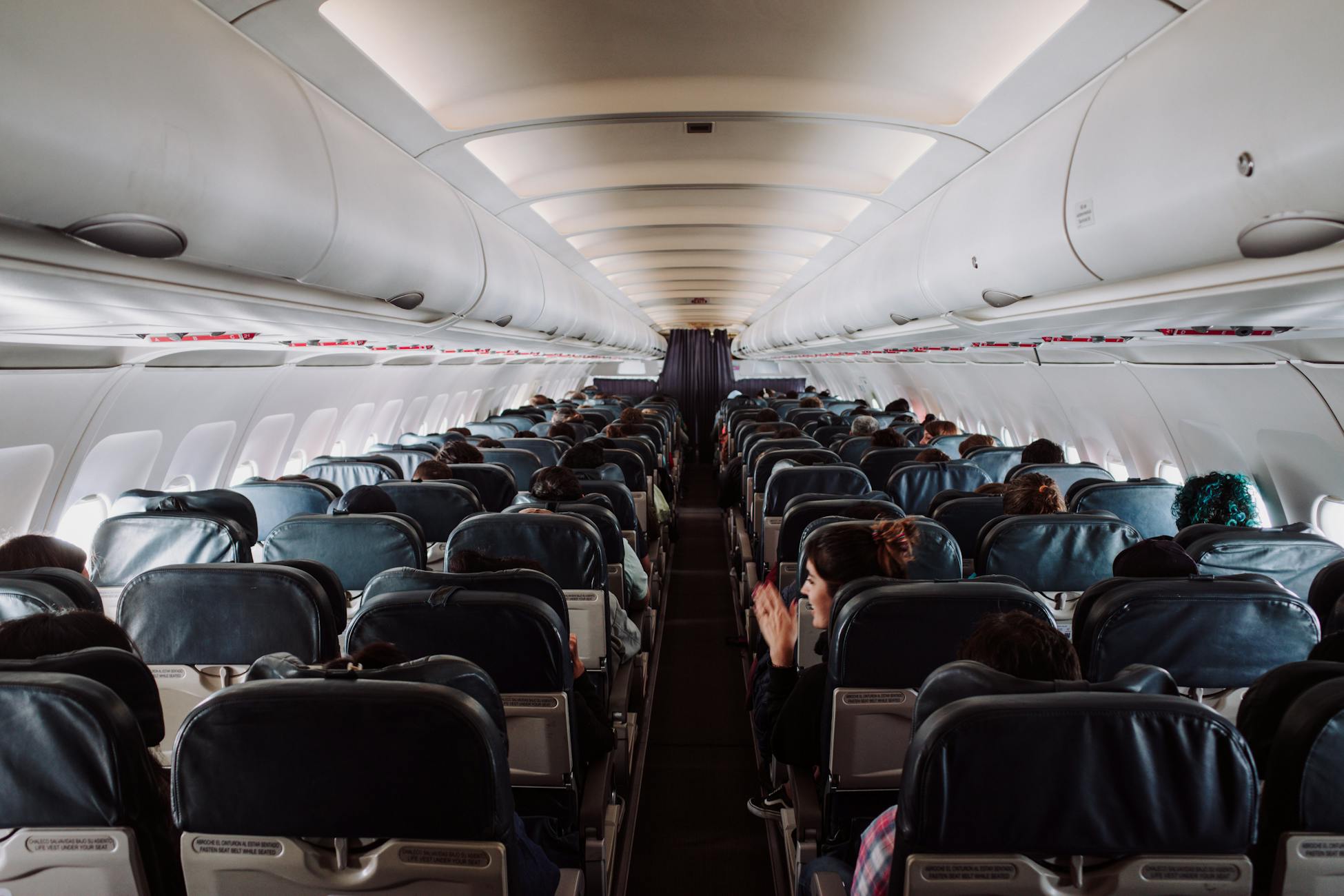

I have never once, in my entire adult life, voluntarily sat in a window seat on an airplane. I’ve turned down upgrades for it. I’ve paid extra to avoid it. When friends ask why, I give the bathroom answer, because it’s easy and no one questions it. But the bathroom answer is a cover story. The real reason lives somewhere deeper, somewhere I didn’t fully understand until my therapist helped me trace my seating preference back to a childhood dinner table where leaving before my mother decided dinner was over could set the whole house on fire.
Some psychologists have described what I’ve been doing all these years as a form of autonomous exit: the psychological need to know, at any given moment, that you can physically remove yourself from a situation without negotiation, without permission, and without having to climb over someone else’s body to do it.
What Your Seat Choice Actually Reveals
Behavioral analyses suggest that psychologists consider airplane seat choice to be surprisingly revealing about personality. Aisle-seat people may tend to value control and freedom of movement. Window people may tend toward introspection and comfort with containment. Middle-seat people, bless them, either booked late or genuinely don’t care, and I remain suspicious of both explanations.
But the aisle-seat preference runs deeper than wanting legroom or easier access to the overhead bin. For many of us, especially those who grew up in environments where emotional weather changed fast and the exits were controlled, the aisle seat is a quiet form of self-regulation. It keeps the nervous system calm. The body can relax because the body knows: if I need to go, I can go.
That knowledge, that certainty of unobstructed departure, does something measurable to stress hormones. When you know you can leave, you’re paradoxically more likely to stay. When you feel trapped, every minor discomfort becomes amplified. The seatbelt sign turning on hits differently when you’re in 14F versus 14C.
The Childhood Architecture of Autonomous Exit
I grew up in a house in Connecticut where the emotional temperature could shift mid-sentence. My mother was volatile, my father absent even when physically present. Dinner was the danger zone. You sat, you stayed, you absorbed whatever was happening across the table, and you did not leave until someone with more authority than you decided it was over.
I spent childhood nights replaying those dinners in my head, trying to figure out what I could have said differently, what facial expression might have prevented the eruption. I became a student of exit strategies before I knew that’s what I was doing. Where is the nearest door? How many people are between me and it? Can I reach it without making a scene?
Children who grow up in volatile households develop a finely tuned radar for spatial positioning. We learn, without anyone teaching us, to sit near doors. To keep our shoes on at parties. To park facing out. These are the habits of a nervous system that learned early: sometimes the only form of power available to you is the ability to leave.
My sister and I both carry versions of this pattern, though we express it differently. She moved across the country, putting physical distance between herself and the family dynamics that shaped us. I stayed in New York but stopped communicating with her for years after a fight about our mother’s birthday dinner. Even that fight, if I’m honest, was really about who got to decide when we could leave.
Self-Determination and the Need to Move Freely
Self-determination theory, one of the foundational frameworks in motivational psychology, identifies autonomy as one of three basic psychological needs. When autonomy is satisfied, we function well. When it’s thwarted, we experience distress, resistance, or withdrawal. The aisle seat is autonomy made physical. It’s a spatial expression of a psychological requirement.
And yet autonomy has a shadow side. Some research on the dangers of social autonomy suggests that the drive for independence can sometimes become its own trap, leading to isolation and disconnection when pursued without awareness. I know this pattern intimately. The same instinct that makes me choose the aisle seat also made me master the Irish goodbye, keep a small social circle, and structure my marriage so that David and I live separately during the work week.
There’s a thin line between protecting your autonomy and building a life where no one can reach you. I’ve walked that line for years. My therapist once asked me: “Are you keeping space, or are you keeping people out?” I’m still working on the honest answer.
The Bathroom Excuse and Other Cover Stories
We rarely tell people the real reason we need the aisle seat. “I have a small bladder” is socially acceptable. “My nervous system requires the knowledge that I can exit this metal tube at a moment’s notice” tends to derail the conversation.
But cover stories carry a cost. Every time I explain my seating preference as a bladder issue, I’m participating in the same minimization I grew up with. In my family, real feelings were always translated into something more manageable. Rage became “having a bad day.” Fear became “being tired.” The need for psychological safety became a preference for convenience.

I see this same translation happening constantly. People who always sit facing the door at restaurants call it “a quirk.” People who won’t attend events without their own car say they “like the flexibility.” People who forgive but quietly distance themselves say they’ve “just been busy.” The cover story protects the wound from examination, which feels like safety but actually prevents healing.
The Body Remembers What the Mind Rationalizes
Autonomous exit is, at its core, a body memory. The mind has rationalized it into a seating preference. But the body remembers the dinner table. The body remembers the car rides where you couldn’t ask to pull over. The body remembers the classrooms, the family gatherings, the relationships where physical departure required emotional negotiation that felt impossible.
As someone with heightened sensory awareness, I feel this in specific, measurable ways. My headaches arrive faster in confined spaces. My breathing changes when someone sits between me and the aisle. I’ve tracked these patterns over years of therapy and meditation, and they’re consistent. The aisle seat doesn’t just satisfy a preference. It regulates my physiology.
I discovered meditation at 29, during the slow implosion of my first marriage, and the practice has given me language for what happens in my body when exit feels blocked. There’s a constriction in the chest. A scanning quality to my attention, where I’m cataloging escape routes instead of being present. Meditation didn’t eliminate these responses, but it helped me notice them without being overtaken.
Autonomous Exit Beyond the Airplane
Once you understand this concept, you start seeing it everywhere. The friend who always drives separately to group events. The colleague who sits in the back row of every meeting. The person at the party who never takes off their coat. These are all variations on the same theme: preserving the option to leave without ceremony or negotiation.
I think about my father sometimes, who died last year. He was the master of physical presence without emotional availability. He sat at the table every night but was already gone. His version of autonomous exit was internal: he left without moving. I wonder now if that was the only kind of leaving he felt he was allowed to do, or if he simply never learned that he could ask for what he needed. The people who become increasingly detached as they age may carry this same pattern, refined over decades into something that looks like peace but functions as protection.
My mother’s version was the opposite: she controlled exit for everyone else. Nobody left the room until she was finished. The table was her stage, and departure was defection. Growing up between these two strategies, the disappearing father and the captive-holding mother, I learned that movement is currency. Whoever controls it, controls the emotional landscape.
Learning to Stay
The real work, for people like me, isn’t in securing the aisle seat. It’s in eventually being able to sit in the middle.
I’m not there yet. I may never fully get there, and I’ve made peace with that. But therapy and meditation have shifted something. I used to need autonomous exit because I didn’t trust myself to survive if I couldn’t leave. Now I need it less urgently, more as a preference than a panic response. There are moments with David, in our weekend life together, where I notice I’ve been sitting still for hours without tracking exits. Those moments feel like something I might cautiously call progress.
I still book the aisle seat. I still park facing out. I still sit near the door at restaurants. But increasingly, these choices feel like habits rather than survival mechanisms, and that distinction matters enormously. A habit can be examined and gradually loosened. A survival mechanism resists all negotiation.
The invisible loneliness of always needing to be near the exit is that you’re never fully inside the experience. You’re always partly calculating departure. The aisle seat gives you freedom to leave, but it also keeps one foot perpetually in the aisle while everyone else has settled in.
So the next time someone insists on the aisle seat with a little too much urgency, resist the bathroom explanation. Consider that they might be preserving something more fundamental than convenience. They might be honoring a nervous system that learned, a long time ago, that the safest place in any room is the one closest to the way out. And they might be slowly, carefully learning that safety can eventually come from within, even if the aisle seat helps in the meantime.