

I’m 77 and my wife of forty-four years started painting last spring and for the first time I’m watching her become someone I haven’t met yet, and it’s both beautiful and terrifying to realize the person you married is still arriving


I want to be honest about something. My wife Jeanette started painting last spring, and I haven’t quite recovered from it. That sounds dramatic for a man who survived cancer in his fifties, who spent decades managing classrooms of teenagers, who thought he’d built a marriage sturdy enough to hold anything. But watching the person you’ve shared a bed with for forty-four years suddenly become someone you don’t entirely recognise is a particular kind of disorientation. Research has shown that group arts interventions like painting can reduce symptoms of depression and anxiety in older adults. That tracks. Jeanette seems lighter. But the research doesn’t mention what it does to the person standing beside them, watching it happen, feeling both grateful and quietly unmoored.
The studio that used to be the spare room
It started small. A community art class at the local centre, Thursday mornings. She came home with paint under her fingernails and a look on her face I hadn’t seen in years. Not happiness exactly. Something closer to absorption. Like she’d been somewhere far away and was still partially there.
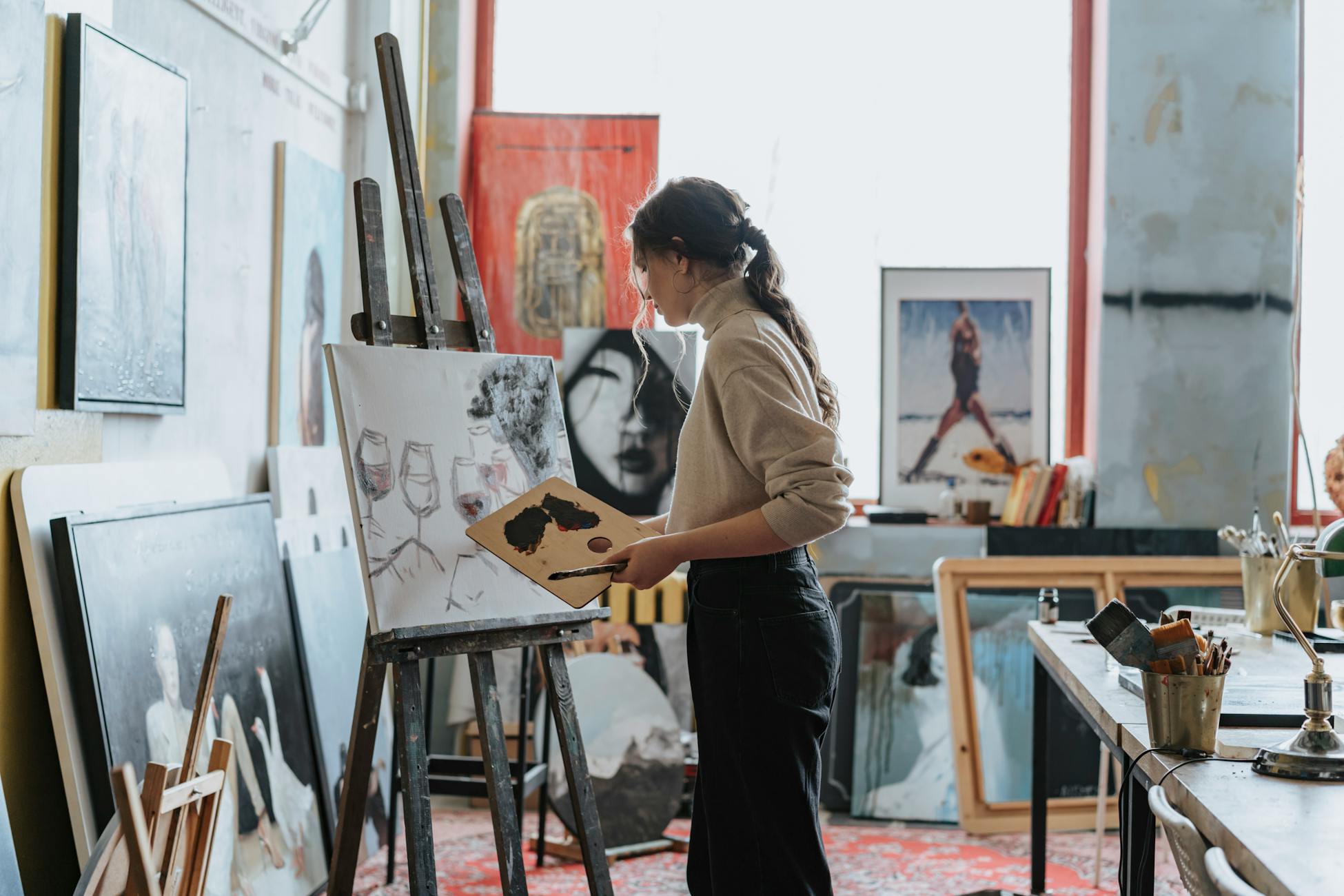
Within a month, she’d converted our spare bedroom into what she calls her studio. I call it the room where I used to keep my birdwatching journals and a perfectly good reading chair. She didn’t ask permission. She just did it. And I remember standing in the doorway, looking at the easel and the jars of brushes and the canvas propped against the wall, thinking: who is this person?
That question unsettled me more than it should have. After forty-four years, you develop a map of your partner. You know their rhythms, their preferences, the way they load the dishwasher, the particular sigh they make when they’re tired but won’t admit it. You think the map is complete. You think the territory has been fully explored.
It turns out the map was always just the parts she’d shown me.
The mathematics of a long marriage
I spent my career as a secondary school mathematics teacher. Decades of it. Patterns, proofs, the comfort of things that resolve cleanly. I brought that same thinking home every evening. Marriage was a system. A well-functioning one, if you maintained it correctly. You communicated. You compromised. You showed up. You kept the gears turning.
And for most of our marriage, that framework held. We raised three boys. We navigated my cancer diagnosis. We weathered the strange grief of children leaving home and the even stranger quiet that followed. I’ve written before about how change never stops, even when you desperately want it to. But I’d been thinking about change as something that happens to a marriage from the outside. Economic pressures. Health scares. Children. What I hadn’t considered was that the person sitting across from you at breakfast might simply decide to become someone new. Not because the old version was broken, but because there was more of her waiting to exist.
That’s the part that terrifies me, if I’m being precise about it.
When comfort becomes a cage
Relationship psychologists have noted that comfort and emotional intimacy aren’t the same thing. You can be deeply comfortable with someone, know exactly how they take their tea, finish their sentences, predict their moods, and still be emotionally distant. Comfort is a pattern. Intimacy requires risk.
For years, I think Jeanette and I had been living inside comfort. Good comfort, mind you. The warm, reliable kind. But comfort nonetheless. And then she picked up a paintbrush and introduced risk into a system I’d spent decades stabilising.
Her paintings aren’t what I expected. They’re not flowers or landscapes or the kinds of things you see at craft markets. They’re abstract, almost aggressive. Deep reds and blacks and strange shapes that look like they’re trying to escape the canvas. She paints late at night sometimes, after I’ve gone to bed, and I lie there listening to the faint sounds of brushes on canvas through the wall, and I think: she has an interior life I’ve never touched.
That thought is both beautiful and devastating. Beautiful because she’s alive in a way that makes her eyes different. Devastating because it means I was wrong about something fundamental. I thought knowing someone meant the surprises eventually stopped. They don’t stop. They just change shape.
The man standing in the doorway
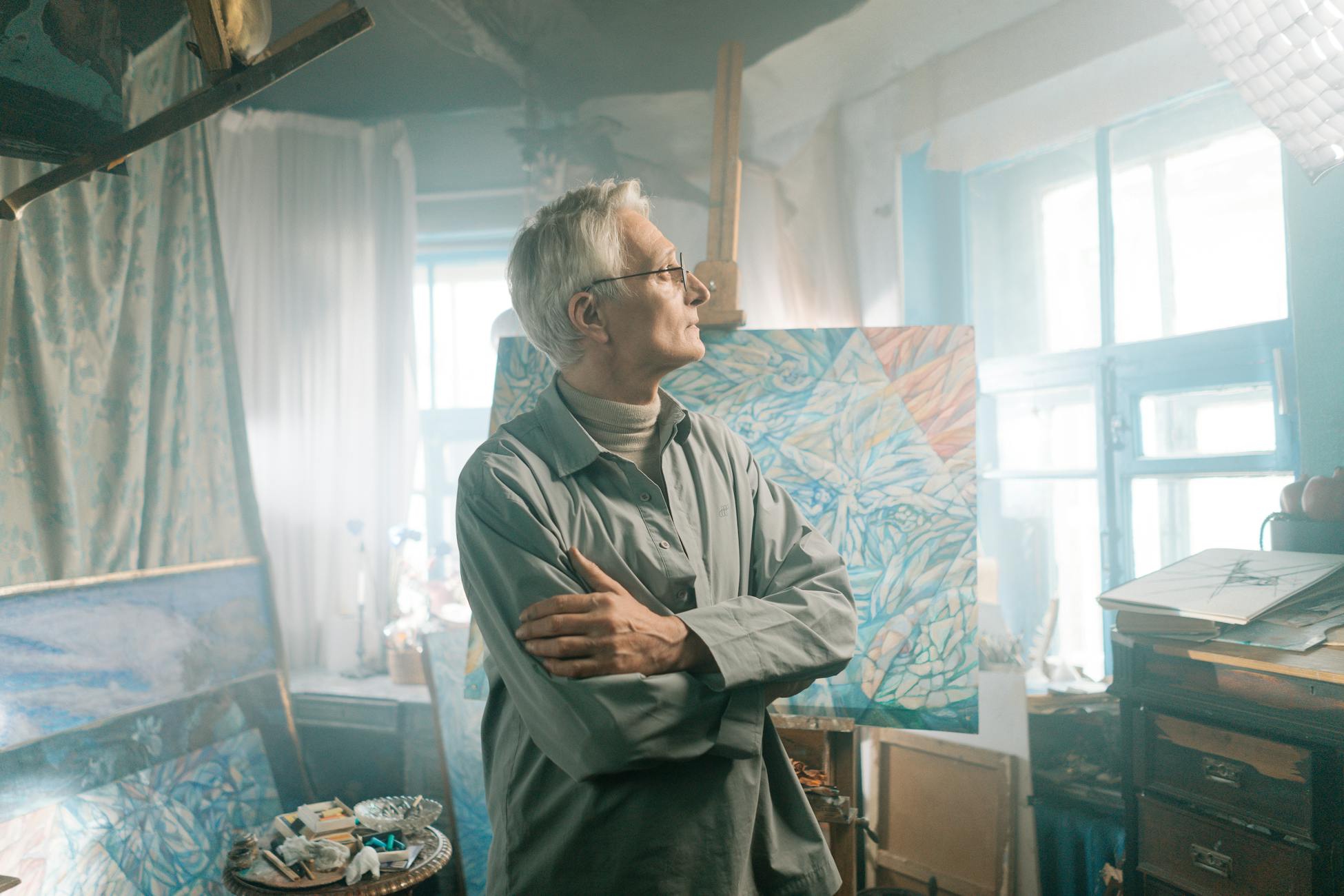
I’ve spent a lot of time in doorways lately. Watching. She doesn’t always notice me there, and when she does, she smiles but doesn’t stop. That’s new. For most of our marriage, Jeanette would stop whatever she was doing when I entered a room. A small interruption, barely noticeable, but consistent. Now she keeps painting. She’s somewhere else, and she’s choosing to stay there.
I need to be careful how I say this, because it could sound like resentment. It isn’t. Or maybe a sliver of it is, tucked under several layers of admiration and awe and something that feels like grief. The grief of realising that the person you thought you’d figured out was, in fact, holding entire rooms of herself in reserve. Not out of dishonesty. Out of something more complex. Maybe she didn’t know those rooms existed either. Maybe she needed to be seventy-three before she could walk into them.
Writers on this site have explored how people learn which parts of themselves are allowed in a relationship and which aren’t. That idea haunts me. Did I, through forty-four years of being a certain kind of husband (structured, dependable, quietly controlling in ways I’m only now recognising), make it harder for Jeanette to become this person sooner? Did my need for a stable system create conditions where her wildest self had to wait?
I don’t know. I’m afraid to ask.

What the research doesn’t tell you
Studies have shown that creative group activities for older adults like painting, music, and dance can reduce depression and anxiety. That’s valuable data. But it measures the person doing the creating. Nobody measures the spouse.
Nobody studies what it feels like to watch your partner of four decades discover a passion that has nothing to do with you. Nobody tracks the quiet recalibration that happens when your role in someone’s story shifts from central to peripheral, even temporarily, even just on Thursday mornings and late Tuesday nights when the brushes come out.
I’ve written about how I confused discipline with actually living, and I think this is another version of that same lesson. I confused knowing Jeanette with understanding her. Knowledge is the facts: she likes Earl Grey, she hates driving at night, she always reads the last page of a novel first. Understanding is something else entirely. Understanding means accepting that she contains parts of herself I haven’t met, may never meet, and that this is precisely what makes her a person rather than a pattern.
Still arriving
Last week she showed me a painting she’d been working on for three months. She was nervous. I could see it in her hands, the way she held the canvas slightly away from her body, like she was offering me something fragile. It was a large piece, dark blues and whites with a shape in the centre that looked, to me, like a door that was slightly open.
I told her it was beautiful. She asked what I saw in it. I said I saw a door. She said she saw a window. And we both stood there looking at the same painting and seeing different things, which is, I suppose, a decent summary of forty-four years.
I’m learning, slowly, that the terror and the beauty aren’t separate experiences. They’re the same experience, viewed from different angles. The terror says: the person you married keeps changing, and you can’t control it. The beauty says: the person you married keeps changing, and you get to watch. Both of those things are true at once.
Many long-term couples face a hidden phase where personal growth and quiet questioning surface after decades. It happens more often than anyone admits. I think Jeanette and I are in that phase now, except she’s the one growing visibly and I’m the one standing in the doorway, trying to grow enough to keep up.
She paints. I watch. Sometimes I sit in the kitchen and listen. The house smells different now, like turpentine and possibility. I’m learning to love the scent.
The person I married is still arriving. And the honest truth is, so am I. Forty-four years in, and we’re both still becoming. I don’t think there’s a formula for that. I spent my whole career looking for formulas. But this, this particular equation, doesn’t resolve. It just keeps expanding. And I’m learning, at seventy-seven, to let it.