

Psychology says the reason retired men sit in silence isn’t because they have nothing to say — it’s because they’ve lost the only identity anyone ever valued them for

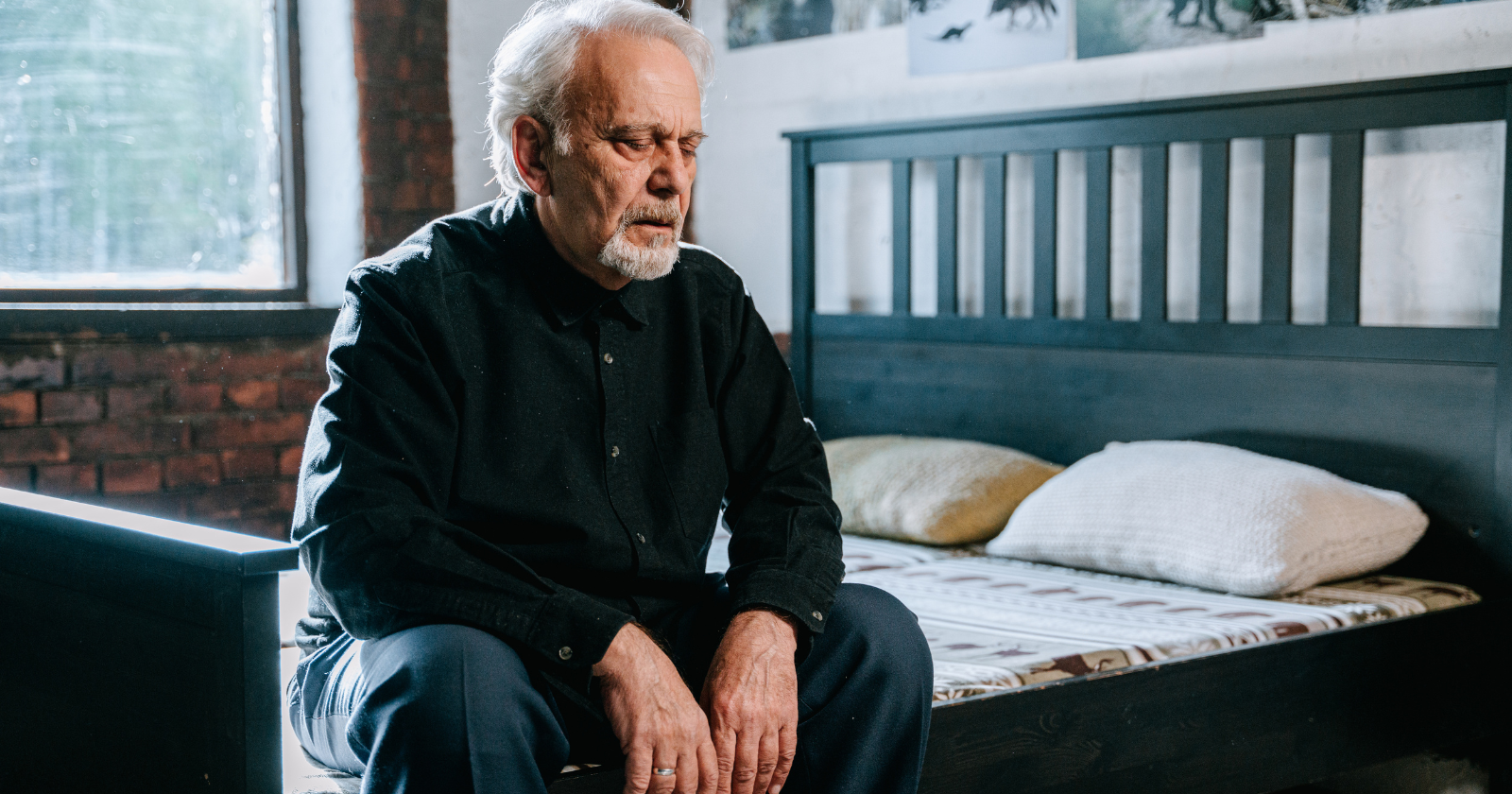

He’s sitting in his chair. The television might be on. He’s not really watching it. His wife asks if he’s okay and he says he’s fine. He doesn’t elaborate. He doesn’t start a conversation. He just… sits.
If you’ve watched a man go through the first year or two of retirement, you’ve probably seen some version of this. And the easy explanation — the one most people land on — is that he’s simply run out of things to say. That after decades of meetings and deadlines and daily demands, he’s finally enjoying the quiet.
But psychology tells a very different story. One that’s far more uncomfortable and far more important to understand.
That silence isn’t contentment. It’s the sound of a man who no longer knows who he is.
The identity that was never really his
For most men of the boomer generation, identity was never something you explored. It was something you earned. You were what you did, what you produced, what you provided. Your worth as a human being was measured almost entirely by your usefulness to other people.
Research from the field of masculine gender role socialization describes how boys learn from a very young age that their value is contingent on performance. Researchers call this “masculinity-contingent self-worth” — a man’s sense of personal value being directly tied to how well he fulfills the societal expectations of being a man. And for decades, those expectations were clear: provide, achieve, produce, don’t complain.
This worked. It worked for forty years. It gave men structure, purpose, social standing, and a ready-made answer to the most basic question any human can ask: Who am I?
I’m an engineer. I’m a manager. I’m the guy who keeps the lights on.
Then retirement comes, and the answer disappears.
Work wasn’t just a job — it was the entire architecture of selfhood
When researchers studied retirement adjustment, they identified three core psychological components that determine how well someone adapts: identity reconstruction, social interaction, and independence. Of the three, identity was the most foundational — and for men, the most fragile.
One retired participant in the study described the feeling this way: when you’ve got a job, you define yourself by your job. You carry a higher status of yourself in your own mind. After retirement, the sentiment was one of redundancy.
This isn’t an overreaction. For many men, work provided essentially everything that psychologists consider necessary for mental health. It provided routine. Social contact. A sense of competence. External validation. A reason to get up in the morning. A place where people needed you.
A 2024 study published in BMC Geriatrics examined depressive symptoms across the retirement transition and found something striking: the meaning men attached to their work was a significantly stronger predictor of post-retirement depression than it was for women. When work meant everything, losing it cost everything.
Women, the research suggests, tend to maintain a broader portfolio of identities throughout their lives — mother, friend, community member, caregiver. Men, particularly men of this generation, were encouraged to go all-in on one identity. And now that identity is gone.
Why he doesn’t talk about it
Here’s what makes this particularly cruel. The generation of men now moving through their sixties and seventies was raised to believe that strength means silence. That asking for help is weakness. That a real man endures.
Research on masculinity and social connectedness has consistently found that men’s social support networks are limited precisely because seeking support or discussing emotions conflicts with male role expectations emphasizing strength and emotional restraint. The dominant practice among men in multiple studies was simply not to share emotions with other men. Or with anyone.
So when a retired man is struggling with an identity crisis — when he feels purposeless, invisible, and fundamentally uncertain about who he is — he does the only thing he was ever taught to do.
He sits quietly and tells you he’s fine.
Dr. Igor Galynker, psychiatry professor at the Suicide Prevention Research Lab at Mount Sinai, puts it bluntly. Men spend their lives achieving and neglect social connections, he explains. Women retire better because it’s less traumatic for them. Men are so invested in their work they lose both the social connections from work and the meaning of life.
The silence has a body count
This isn’t just an emotional problem. It’s a public health emergency that almost nobody is talking about.
According to the CDC’s National Center for Health Statistics, men age 85 and older have the highest suicide rate of any demographic group in the United States — 55.7 deaths per 100,000 people. Among men 55 and older, suicide rates increased significantly between 2001 and 2021. And retirement is consistently identified as one of the key precipitating life transitions.
Dr. Yeates Conwell, psychiatry professor at the University of Rochester Medical Center, identifies five factors that converge in older men: depression, disease, disability, disconnection, and deadly means. He notes that because male identity is so wrapped up in self-reliance, the transition to needing help from others can be devastating. And in retirement, men lose many of their connections and most of their sources of self-esteem.
A meta-analysis published in the International Journal of Environmental Research and Public Health found that the mean prevalence of depression among retirees was 28%, with rates significantly higher among those who retired involuntarily. A separate review in Epidemiology and Psychiatric Sciences described retirement as a major life transition associated with numerous risk factors for developing depression.
Over 6,000 older Americans die by suicide each year. The vast majority are men. And an overwhelming number of them visited their primary care physician in the month before their death — most without being diagnosed with a psychiatric condition.
They went to the doctor. They didn’t say they were struggling. Because they were never given the language, the permission, or the cultural scaffolding to say those words.
Nobody ever asked who he was beyond what he did
This is the part that should stop us in our tracks.
For most of these men’s entire adult lives, nobody — not their employers, not their friends, not their families, and often not even their wives — ever encouraged them to develop an identity beyond their productivity. Nobody asked what they loved. What moved them. What they dreamed about when they weren’t solving other people’s problems.
The question was always: What do you do?
Never: Who are you?
And when work ends, the first question becomes unanswerable. The second question was never even attempted.
Research from retirement psychology describes this transition as “a psychosocial process of identity transition and search for meaning,” where the challenge lies in creating a new sense of self once the old one no longer fits. But for many men, there is no new sense of self waiting in the wings. There’s just an empty room and a television that fills the silence.
What the chair really means
When a retired man sits in silence, he’s not relaxing. He’s not savoring his freedom. He’s not choosing quiet.
He’s trapped in a gap between who he was and who he doesn’t know how to become.
He spent his entire life being valued for what he could do for other people — the money he earned, the problems he solved, the responsibilities he carried. And now that those things are gone, he’s confronting a terrifying possibility: that without his usefulness, he doesn’t know what he’s worth.
He won’t say this. He might not even consciously think it. But it’s there in the early bedtimes, the declining invitations, the shrinking world, the flat tone when he says he’s fine.
The conversation we need to start having
If you have a retired father, husband, brother, or friend who has gone quiet, it’s worth understanding that you’re not looking at a man who has nothing to say. You’re looking at a man who lost the only version of himself that anyone ever seemed to care about.
And the fix isn’t a hobby. It isn’t golf. It isn’t a suggestion to “stay busy.”
The fix starts with asking a different question. Not “What are you doing with your time?” but “What matters to you now?” Not “Have you thought about volunteering?” but “What did you always wish you’d had time for?”
Research on identity change in retirement suggests that older adults who maintain multiple group memberships and social identities experience more positive transitions. It’s not about finding one new thing to replace work. It’s about discovering that you were always more than your job title — even if nobody ever told you that.
The generation of men now sitting in living rooms across the country were taught that their value was in their hands, their output, their provision. They built houses, careers, families, and entire lives around that belief. They were never told it was a trap.
The least we can do is stop mistaking their silence for peace.
It isn’t peace. It’s grief. And it deserves to be heard.
