

People who were always the strong one in the family often become the loneliest person in the room after 65

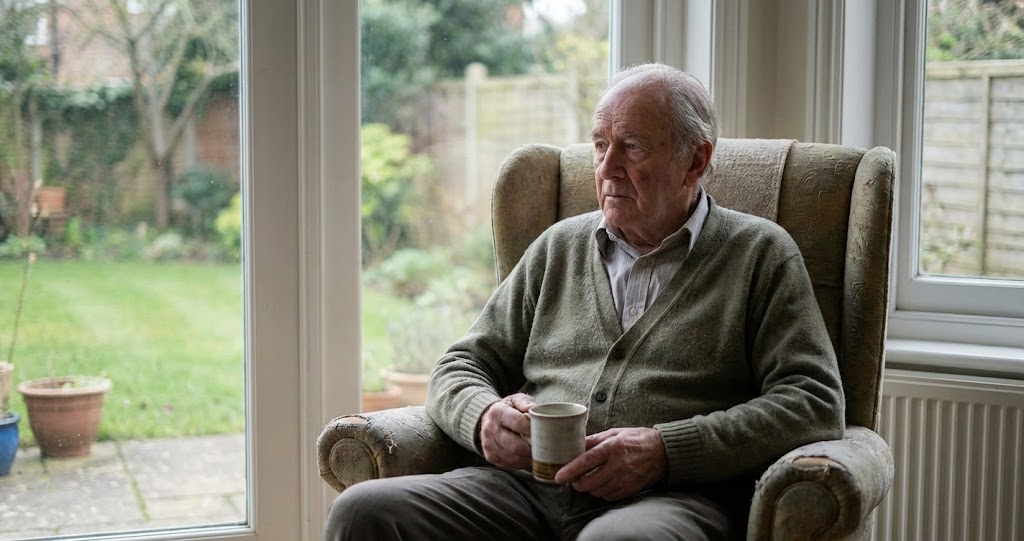

Every family has one. The person everyone calls when things fall apart. The one who organizes the funeral, handles the finances when someone can’t cope, drives across town at 2am when there’s a crisis. The one who holds it together so everyone else can fall apart safely.
For decades, this person was the anchor. The fixer. The rock.
And then, somewhere after 65, the calls slow down. The kids have their own lives. The siblings have drifted. The spouse may be gone. The role that once defined them — the strong one, the capable one, the one who never needed anything — has quietly become the very thing that keeps people from checking in.
Because here’s the cruel irony: when you’ve spent your whole life being the person everyone leans on, people eventually assume you don’t need leaning on yourself.
The identity trap of being “the strong one”
There’s a psychological pattern that plays out in families, and it rarely gets talked about. When someone takes on the role of the emotional anchor — the caregiver, the problem-solver, the person who absorbs everyone else’s stress — that role becomes part of their identity. It’s who they are, not just what they do.
This works fine (or at least appears to) for decades. But it comes with a hidden cost: the strong one never builds the neural pathways for asking for help. They never practice vulnerability. They never learn to say “I’m struggling” because they were always the one other people said that to.
Research in the field of social isolation and loneliness, reviewed by the National Academies of Sciences, Engineering, and Medicine, identifies that loneliness in older adults operates through behavioral, psychological, and biological pathways. One of those psychological pathways is particularly relevant here: people who have developed a strong self-reliant identity often struggle to recognize or communicate their own loneliness because it conflicts with how they see themselves.
As the NHS puts it simply: older people tend not to ask for help because they have too much pride. And when your entire identity is built around being the one who gives help, that pride runs even deeper.
How the slow fade happens
It doesn’t happen overnight. It’s gradual — so gradual that no one notices until it’s already entrenched.
In your 40s and 50s, you’re at the center of everything. Family gatherings happen at your house. People call you first with news, problems, decisions. You’re the hub the family spins around.
Then the transitions start. Kids move away. Parents pass. You retire, and suddenly the daily social contact from work vanishes. Friends start dealing with their own health issues. Your spouse might be declining, or already gone.
Each of these losses is individually manageable. But cumulatively, they hollow out the social structure that used to surround you — and because you were never the one who reached out to say “I need company,” nobody realizes the structure is collapsing.
According to the National Institute on Aging, common risk factors for social isolation in older adults include living alone, losing family or friends, having chronic illness, and hearing loss. But there’s a less obvious risk factor that doesn’t make the official lists: having spent a lifetime training everyone around you that you’re fine.
The health consequences are staggering
This isn’t just about feeling sad. The physical toll of loneliness and social isolation in older adults is severe and well-documented.
A landmark meta-analysis led by psychologist Julianne Holt-Lunstad at Brigham Young University, published in Perspectives on Psychological Science, found that social isolation and loneliness are associated with a roughly 26% increased risk of premature death. Holt-Lunstad’s research established that the mortality risk from a lack of social connection is comparable to smoking up to 15 cigarettes a day — and exceeds the risk from obesity, physical inactivity, and air pollution.
The World Health Organization reports that around 1 in 4 older adults are socially isolated, and loneliness has been linked to increased risks of heart disease, stroke, dementia, depression, and cognitive decline.
For the person who spent their life as the family’s backbone, these statistics are particularly troubling — because the same traits that made them strong (self-reliance, emotional stoicism, reluctance to burden others) are the exact traits that make them unlikely to seek help when the loneliness sets in.
Why nobody checks in
This is the part that stings the most, and it’s worth being honest about it.
The family doesn’t stop caring. They just stop thinking to call. Not out of cruelty — out of assumption. They’ve been conditioned by decades of evidence that this person is fine. This person doesn’t need anything. This person has it handled.
Meanwhile, the family’s emotional bandwidth has shifted. The younger generation is raising kids, building careers, navigating their own crises. The strong one, who handled everything silently for so long, doesn’t register as someone who might need a Wednesday afternoon phone call just to hear another voice.
And the strong one would never ask for it. Because asking would mean admitting they’re not fine. And they’ve never once done that.
Holt-Lunstad, whose own experience as a caregiver during her husband’s cancer diagnosis gave her personal insight into this dynamic, has spoken about how deeply ingrained the barrier to asking for help can be. She noted that we tend to view needing others as weakness, when in reality it should be understood as interdependence — the recognition that relying on others and having others rely on us is a natural part of healthy human functioning.
The loneliness isn’t what you think it looks like
When most people picture a lonely older person, they imagine someone sitting alone in a dark room. But for the former “strong one,” loneliness often looks completely different.
It looks like being busy. Keeping the house immaculate. Maintaining routines. Staying productive. From the outside, everything appears normal — maybe even admirable. “They’re doing so well for their age!”
But underneath all that activity, there’s a growing absence of the thing that actually matters: someone who sees them not as the capable one, but as a whole person who might sometimes be afraid, or sad, or just tired of being the only one holding things up.
Research published in The Journals of Gerontology confirms that social isolation among family caregivers — which often includes those who spent years as the family’s primary emotional support — is associated with depression, reduced quality of life, and a heightened sense of resentment. The isolation doesn’t just make them sad. Over time, it can make them bitter — and that bitterness can further push people away, creating a cycle that’s incredibly difficult to break.
What makes this different from ordinary loneliness
Ordinary loneliness is painful, but it’s at least recognizable. You know you’re lonely. You might tell someone. You might seek out connection.
What the “strong one” experiences is something more complicated. It’s a loneliness that’s wrapped in competence. It’s invisible to others and often invisible to themselves — at least initially. They might not even call it loneliness. They might call it “just getting on with things” or “not wanting to be a burden.”
But the body keeps the score. Sleep gets worse. Energy drops. Small health issues pile up. The immune system weakens. The mind gets foggier. And because they’re still operating under the identity of the strong one, they don’t connect the dots between their declining health and the absence of meaningful social connection.
The National Academies report on social isolation emphasizes that loneliness and social isolation have been linked to increased risk of dementia, depression, anxiety, and cardiovascular disease — and that these effects operate through multiple biological mechanisms, including increased inflammation and dysregulation of the stress response system.
What needs to change
If you recognize someone in your family who fits this description — or if you recognize yourself — here’s what the research and clinical wisdom points to.
For the family: Don’t wait for them to ask. They won’t. The person who spent 40 years as the family anchor has no practice asking for support and no intention of starting now. Call anyway. Visit anyway. Don’t accept “I’m fine” at face value. Include them in plans — not out of obligation, but with genuine intention.
For the strong one: The hardest thing you may ever do is admit that the role that defined you for decades has left you isolated. But recognizing it is the first step. You don’t have to stop being strong. You just have to stop believing that strength means doing everything alone.
There are practical steps that help: joining a group (walking groups, book clubs, volunteer organizations, faith communities), maintaining regular contact with even one or two close people, staying physically active, and — perhaps most importantly — learning to let people in.
The WHO recommends a range of interventions for loneliness in older adults, including social skills training, community groups, befriending programs, and cognitive behavioral approaches. But at the core of all of these is one simple shift: allowing connection to flow in both directions.
The bottom line
Being the strong one was never a character flaw. It was a gift to every person who benefited from that strength. But it came with an invisible cost — a cost that often doesn’t come due until after 65, when the structure that surrounded you has quietly dissolved and the skills you need most (vulnerability, asking, receiving) are the ones you never developed.
If this person is in your family, call them today. Not because they asked you to. Not because they seem like they need it. Call them precisely because they never would have asked.
And if this person is you — please hear this: needing people doesn’t make you weak. It makes you human. The same strength that carried everyone else can now carry you toward something new: letting someone else hold the space for a change.
