

Psychology says the happiest people over 70 don’t actually ‘stay young’ – they’ve learned to stop measuring their worth against a version of themselves that no longer exists

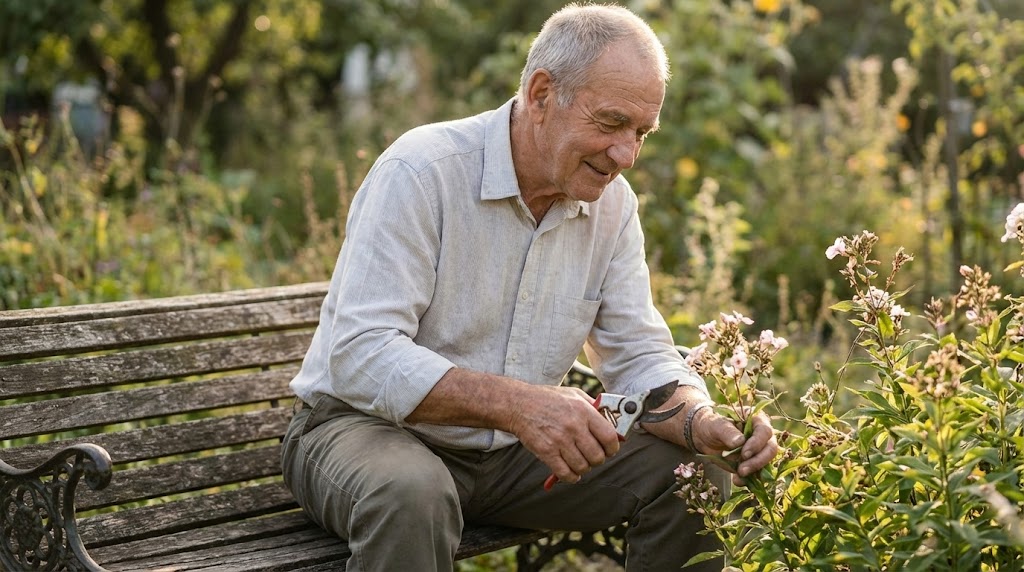

Ever notice how some 70-somethings seem miserable despite having achieved everything they wanted, while others radiate genuine contentment even if their knees creak and they can’t remember where they left their reading glasses?
The difference isn’t about who’s “aging better” or who’s managed to “stay young.” It’s about something far more profound that psychology is finally beginning to understand.
Daniel J. Levitin, author and neuroscientist, notes that “Happiness may seem like a young person thing.” But here’s where it gets interesting — the data tells a completely different story.
Erika Andersen shares that “A Gallup poll conducted in 2008 with over 340,000 people showed that adults in their 70s and 80s are significantly happier and more satisfied with their lives than younger adults by almost every measure.”
Let that sink in for a moment. The happiest people aren’t the ones with tight skin and boundless energy. They’re the ones who’ve learned something most of us are still struggling with.
The trap of measuring backwards
Think about the last time you looked at an old photo of yourself. What went through your mind?
If you’re like most people, you probably compared your current self to that younger version. Maybe you noticed the extra lines around your eyes, the grey creeping into your hair, or how your body has changed.
This constant backward comparison is exhausting. It’s like trying to squeeze into your high school jeans — not only is it unrealistic, but it’s also completely missing the point of where you are now.
The happiest older adults have figured out what Buddhist philosophy has been teaching for centuries: impermanence isn’t something to fight against. It’s the nature of everything. When I studied psychology at university, this concept seemed abstract. But now, watching my wife’s Vietnamese family honor their elders with such reverence, I see how different cultures understand aging as accumulation of wisdom rather than loss of youth.
Why acceptance beats resistance
Here’s what blew my mind when I discovered it: Research shows that older adults with positive self-perceptions of aging lived 7.5 years longer than those with less positive views.
Seven and a half years. That’s not a typo.
It turns out that how you perceive yourself as you age literally affects how long you live. When you stop measuring your worth against who you used to be and start appreciating who you’ve become, your entire physiology responds differently.
This isn’t about toxic positivity or pretending everything is awesome when your back hurts. It’s about recognizing that your value isn’t tied to your ability to run a marathon or pull an all-nighter.
The memory paradox
You know what’s ironic? The more you stress about aging, the worse your memory gets.
Research indicates that older adults who view aging positively experience better memory and reduced loneliness. It’s almost like our brains reward us for accepting ourselves.
I’ve seen this play out in real life. A friend’s mother, who’s 72, started learning Italian last year. She doesn’t care that she’s slower than the twenty-somethings in her class. She’s not comparing herself to her younger self who might have picked it up faster. She’s just enjoying the process, and guess what? She’s actually retaining more than she expected.
Meanwhile, another acquaintance spends so much energy lamenting how sharp he used to be that he’s creating the very cognitive decline he fears.
The quality of life secret
Cédric Afsa, co-author of a French study, found that “people are at their happiest between the age of 65 and 70.”
Why this specific age range? Because by then, most people have finally given up the exhausting game of trying to be who they were at 30.
A systematic review found that positive self-perception of aging is associated with higher quality of life in older adults. The happiest septuagenarians aren’t the ones desperately clinging to youth. They’re the ones who’ve embraced where they are.
They’ve stopped asking “How can I get back to who I was?” and started asking “Who am I becoming?”
Practical shifts that actually work
So how do you start making this shift, regardless of your current age?
First, catch yourself when you’re doing the comparison game. Notice when you’re measuring today’s you against yesterday’s version. Just becoming aware of it is half the battle.
Second, practice what I call “forward gratitude.” Instead of mourning what you’ve lost, appreciate what you’ve gained. Sure, you might not recover from a night out like you used to, but you’ve probably also gained wisdom about what’s actually worth your time.
In my book “Hidden Secrets of Buddhism: How To Live With Maximum Impact and Minimum Ego”, I explore how Buddhist principles of impermanence can radically shift our relationship with aging. These aren’t religious concepts — they’re practical tools anyone can use.
Third, redefine your metrics. If you’re measuring your worth by how much you can bench press or how late you can stay up, you’re setting yourself up for disappointment. What about measuring wisdom gained, relationships deepened, or peace cultivated?
The compound effect of self-acceptance
Here’s something nobody talks about: self-acceptance compounds over time.
Every day you practice accepting where you are instead of fighting it, you build a little more peace. By the time you hit 70, if you’ve been practicing this, you’ve accumulated decades of self-compassion.
The happiest older adults didn’t suddenly wake up at 70 and decide to accept themselves. They’ve been practicing it, consciously or unconsciously, for years.
This reminds me of a Buddhist teaching about accepting imperfection while still striving for growth. You can acknowledge that your body isn’t what it was at 25 while still taking care of it. You can accept that your energy levels have changed while still pursuing meaningful goals.
Final words
The happiest people over 70 have discovered something that could revolutionize how we all approach aging: your worth isn’t diminished because you’ve changed.
They’ve stopped treating their younger selves as the gold standard and started recognizing that every phase of life has its own unique value. They understand what psychology is now proving — that happiness in later life comes not from staying young, but from evolving gracefully.
You don’t have to wait until 70 to learn this lesson. Whether you’re 30, 50, or 80, you can start today. Stop measuring backward. Start appreciating forward.
Because here’s the truth: the version of you that exists right now, with all its imperfections and changes, is exactly who you’re supposed to be at this moment. And that’s more than enough.
