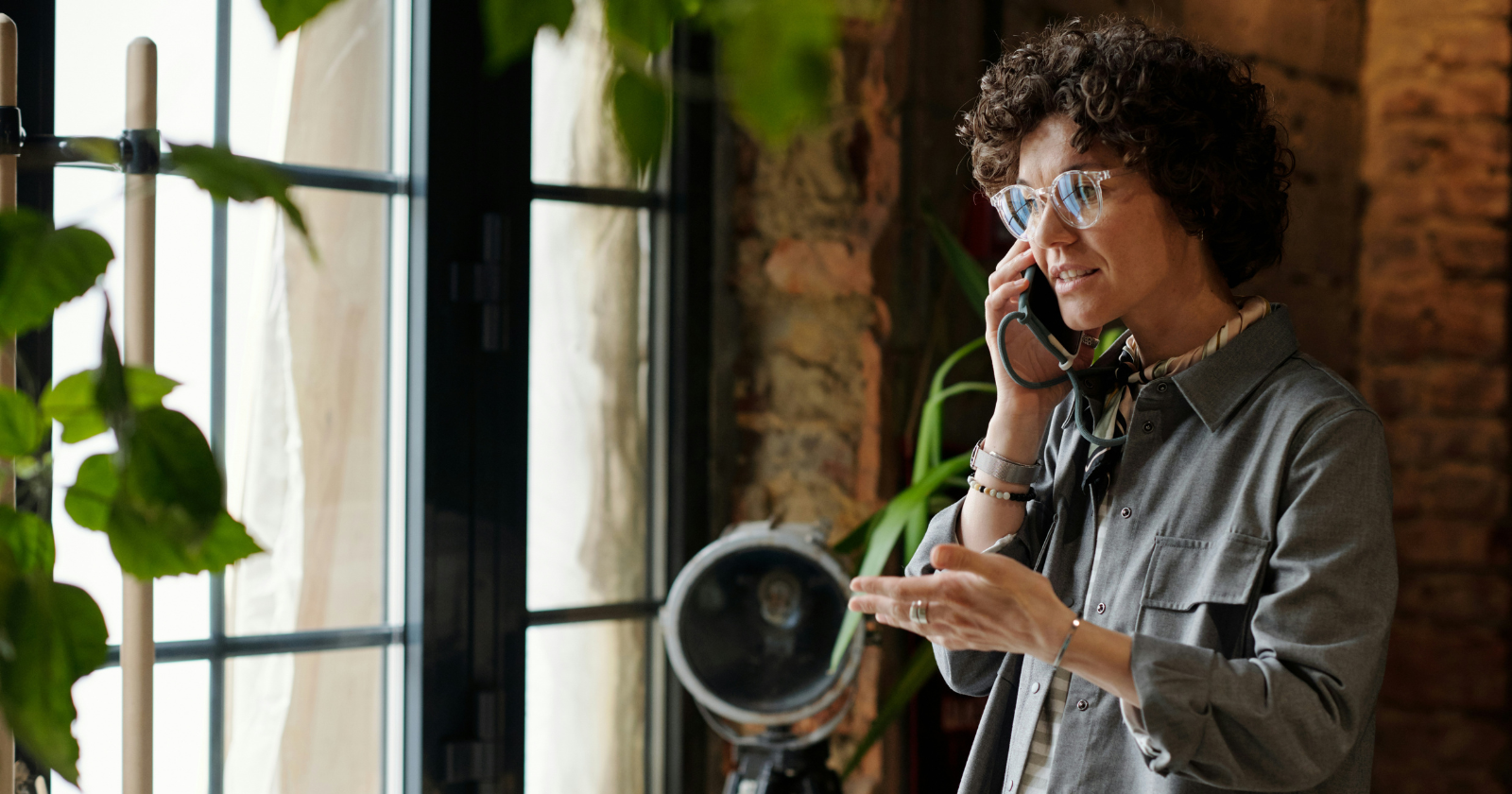
Psychology says adults who can’t sit still during phone conversations aren’t anxious — they learned early that their body language was the only part of communication they could fully control, and removing that channel creates a disorientation they have to physically compensate for
Last week, I found myself pacing around my apartment during a video call with my editor, even though my camera was off.
I walked from the kitchen to the living room, back and forth, gesturing with my free hand as if she could see me through the phone.
When I finally sat down, something felt wrong.
The words came out stilted, my thoughts scattered.
I stood up again, and suddenly everything flowed.
This wasn’t new behavior for me.
I’ve been doing this dance since childhood, and if you’re someone who can’t sit still during phone conversations, you might recognize this pattern too.
The psychology behind it runs deeper than simple restlessness or anxiety.
The body as our first language
Growing up in a household where voices often rose and tensions ran high, I learned something crucial before I even understood what I was learning.
My body language became my safety net.
When words failed or felt dangerous, when the verbal exchanges around me turned volatile, I could still control how I moved, how I positioned myself, how I communicated without speaking.
Many of us who grew up in similar environments developed this same relationship with our physical presence.
We learned to read rooms through body language.
We noticed when someone’s shoulders tensed before they raised their voice.
We saw how a shifted posture meant the conversation was about to change direction.
And most importantly, we discovered that while we couldn’t control what others said or did, we could control our own physical responses.
This early conditioning doesn’t just disappear in adulthood.
Why phone calls feel incomplete
When we remove the visual element from communication, we’re not just losing facial expressions.
We’re losing an entire channel of information that some of us have relied on since childhood.
Think about how much you communicate without words during an in-person conversation.
The slight lean forward to show interest.
The subtle step back when you need space.
The hand gestures that emphasize your points.
The way you mirror someone’s posture to build rapport.
For those of us who learned early that body language was our most reliable communication tool, phone conversations strip away our primary means of expression.
We’re left with just our voice, and that feels like trying to paint with only one color.
The pacing, the gesturing to no one, the constant movement during calls – these aren’t signs of anxiety or inability to focus.
They’re attempts to recreate that missing communication channel.
We’re quite literally trying to embody our words because that’s how we learned to make ourselves understood.
Movement as translation
During my daily walks in Central Park, I often take calls.
People assume I’m multitasking, but that’s not quite right.
The movement helps me think more clearly.
Each step seems to unlock the next thought.
The rhythm of walking matches the rhythm of conversation.
This isn’t coincidental.
Movement and communication are deeply linked in our brains.
• Walking while talking activates different neural pathways than sitting still
• Physical gestures help us access memories and organize thoughts
• Movement reduces cognitive load, making complex conversations easier
• The bilateral stimulation from walking can help process emotions during difficult calls
When I discovered meditation at 29, during one of the hardest periods of my marriage, I initially struggled with the stillness.
But what I learned through that practice was that movement and stillness both serve their purposes.
Sometimes we need to move to think.
Sometimes we need to be still to feel.
Phone conversations, for many of us, fall into that first category.
The control connection
There’s another layer to this that took me years of journaling to understand.
When you grow up in an environment where verbal communication was unpredictable or unsafe, you develop hypervigilance around conversations.
You’re always slightly on edge, waiting for the shift, the change in tone, the sudden escalation.
Body language became our early warning system and our shield.
We could make ourselves smaller when things got heated.
We could position ourselves near exits.
We could use our physical presence to de-escalate or redirect.
Take that visual element away, and we lose our primary defense mechanism.
The disorientation isn’t just communicative.
On some level, our nervous system remembers that conversations without body language cues were the dangerous ones.
The phone calls where you couldn’t see the other person’s face.
The arguments from another room where you could only hear raised voices.
So we move.
We pace.
We gesture.
We recreate the physical dimension of communication because that’s where we feel most in control.
Reframing the movement
Instead of fighting this tendency, I’ve learned to work with it.
I have a specific path I walk during important calls.
I keep a stress ball on my desk for video calls where I need to stay in frame.
I’ve set up a standing desk area specifically for phone conversations.
This isn’t giving in to a weakness or inability to sit still.
This is honoring how our brains and bodies learned to communicate.
Some of us are kinesthetic communicators, not because we’re anxious or unfocused, but because movement is literally how we learned to survive and connect.
In many cultures, movement and communication are inseparable.
Italian conversations without hand gestures feel incomplete.
Many African cultures incorporate movement and rhythm into storytelling.
Indigenous peoples often walk together while discussing important matters.
Perhaps those of us who can’t sit still during phone calls aren’t broken.
Maybe we’re just remembering an older, more embodied way of communicating.
Final thoughts
If you’re someone who paces during phone calls, who gestures wildly to empty rooms, who feels physically uncomfortable sitting still while talking, you’re not alone.
And more importantly, you’re not anxious or unable to focus.
You learned early that your body was a trustworthy communication tool when words weren’t enough or weren’t safe.
That learning shaped how your brain processes conversations.
Rather than seeing this as something to fix, what if you saw it as something to understand and work with?
Your movement during phone calls isn’t a bug.
For you, it might just be a feature.