Blog

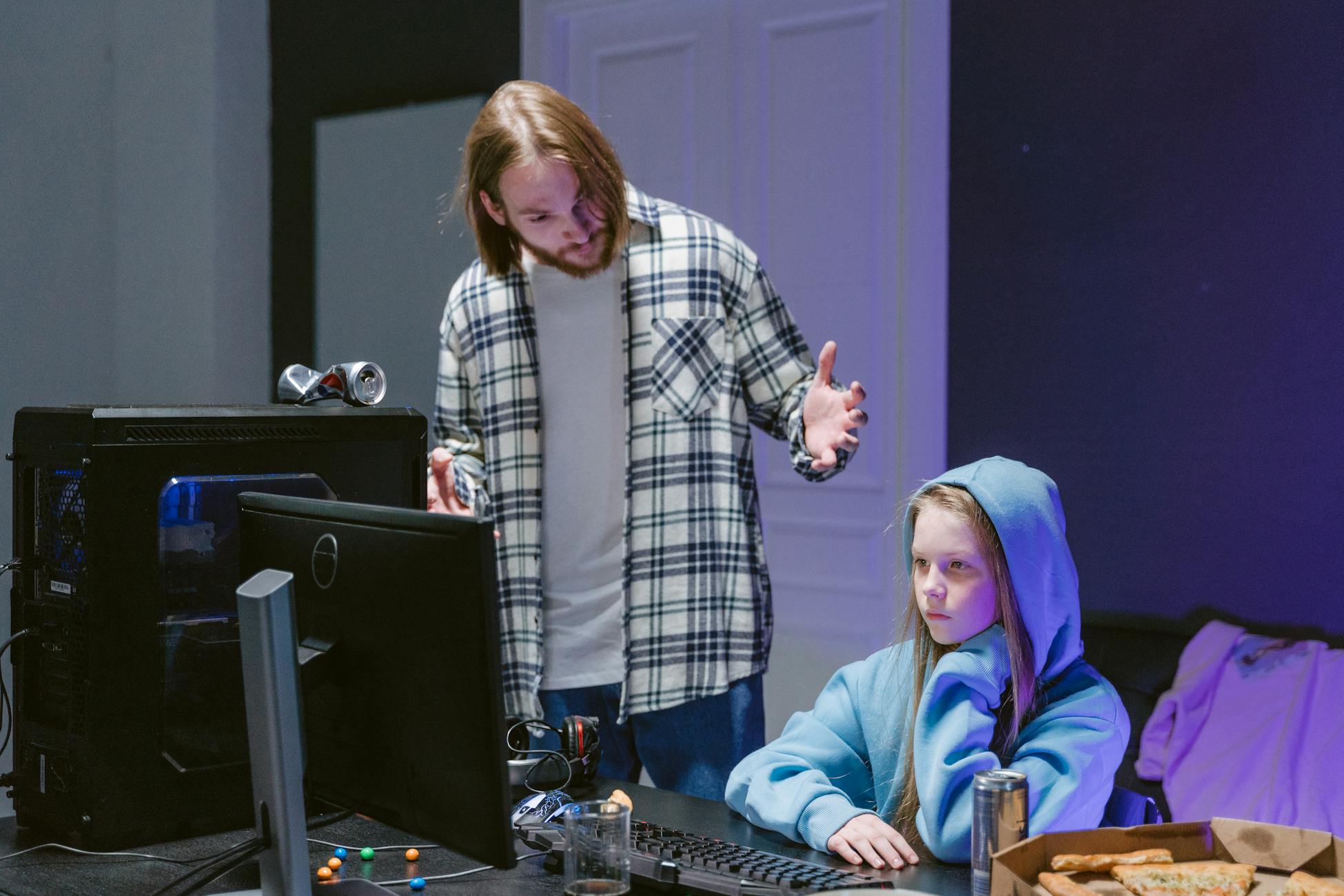
A father scolds his daughter playing video games on a computer, creating a tense moment.

Behavioral scientists found that the generation gap between boomers and millennials isn’t actually about values. It’s about emotional dialect. Both generations care deeply about family, loyalty, and hard work, but they express it in languages so different that love from one side registers as control or indifference on the other

Two generations speaking the same emotional language with entirely different grammars, and wondering why nobody feels heard.


Read More »

Psychology says the hardest part of watching your parents age isn’t the physical decline — it’s the specific Tuesday afternoon when you realize mid-sentence that you’re now explaining to your father how his own mortgage works, and the role reversal happened so gradually that neither of you can remember when you stopped being the child

The moment arrives disguised as an ordinary Tuesday, when you’re mid-explanation about something mundane and catch yourself using the same patient tone your father once used to teach you about the world—except now the student has become the teacher, and neither of you can pinpoint exactly when the classroom flipped.

Read More »

Psychology says the hardest part of watching your parents age isn’t the physical decline — it’s the moment you realize they’ve started performing competence the same way you performed adulthood when you first moved out, and you’re both pretending not to notice the act

The shift happens in a grocery store aisle when you catch them doing exactly what you did at 22 — pretending everything’s fine while secretly struggling with tasks that once came naturally.

Read More »

A letter to the mother who now asks me what day it is: I don’t mind answering. What breaks me is that you ask with the same apologetic smile you wore when I was sixteen and you forgot to pick me up from practice, as if inconveniencing me has always been your greatest fear.

The hardest part isn’t answering her repeated questions about what day it is—it’s watching her apologize for asking, as if sixty years of selfless love could ever be an inconvenience.

Read More »
A young boy interacts with his father outside, holding a lollipop. Parenting and bonding captured.

My adult child told me they’re healing their inner child and I wanted to support them, but what I couldn’t say is that their inner child was my actual child, and watching them describe our home like a place they had to recover from broke something in me that therapy language doesn’t have a word for

When your child calls your home a wound they’re recovering from, the therapy vocabulary you’ve spent years learning suddenly has nothing to offer you.

Read More »

I’m 55 and I’ve been using Viktor Frankl’s ideas about finding meaning in suffering to justify a marriage that ended fifteen years ago emotionally — and I’m just now realizing that endurance without growth isn’t meaning, it’s just fear wearing a philosophical costume

After two decades of using Holocaust survivor Viktor Frankl’s philosophy about finding meaning in suffering to justify staying in an emotionally dead marriage, a late-night journaling session revealed the brutal truth: I wasn’t being profound, I was just a coward in philosopher’s clothing.

Read More »
A father scolds his daughter playing video games on a computer, creating a tense moment.

Behavioral scientists found that the generation gap between boomers and millennials isn’t actually about values. It’s about emotional dialect. Both generations care deeply about family, loyalty, and hard work, but they express it in languages so different that love from one side registers as control or indifference on the other

Two generations speaking the same emotional language with entirely different grammars, and wondering why nobody feels heard.

Read More »

Psychology says the hardest part of watching your parents age isn’t the physical decline — it’s the specific Tuesday afternoon when you realize mid-sentence that you’re now explaining to your father how his own mortgage works, and the role reversal happened so gradually that neither of you can remember when you stopped being the child

The moment arrives disguised as an ordinary Tuesday, when you’re mid-explanation about something mundane and catch yourself using the same patient tone your father once used to teach you about the world—except now the student has become the teacher, and neither of you can pinpoint exactly when the classroom flipped.

Read More »

Psychology says the hardest part of watching your parents age isn’t the physical decline — it’s the moment you realize they’ve started performing competence the same way you performed adulthood when you first moved out, and you’re both pretending not to notice the act

The shift happens in a grocery store aisle when you catch them doing exactly what you did at 22 — pretending everything’s fine while secretly struggling with tasks that once came naturally.

Read More »

A letter to the mother who now asks me what day it is: I don’t mind answering. What breaks me is that you ask with the same apologetic smile you wore when I was sixteen and you forgot to pick me up from practice, as if inconveniencing me has always been your greatest fear.

The hardest part isn’t answering her repeated questions about what day it is—it’s watching her apologize for asking, as if sixty years of selfless love could ever be an inconvenience.

Read More »
A young boy interacts with his father outside, holding a lollipop. Parenting and bonding captured.

My adult child told me they’re healing their inner child and I wanted to support them, but what I couldn’t say is that their inner child was my actual child, and watching them describe our home like a place they had to recover from broke something in me that therapy language doesn’t have a word for

When your child calls your home a wound they’re recovering from, the therapy vocabulary you’ve spent years learning suddenly has nothing to offer you.

Read More »

I’m 55 and I’ve been using Viktor Frankl’s ideas about finding meaning in suffering to justify a marriage that ended fifteen years ago emotionally — and I’m just now realizing that endurance without growth isn’t meaning, it’s just fear wearing a philosophical costume

After two decades of using Holocaust survivor Viktor Frankl’s philosophy about finding meaning in suffering to justify staying in an emotionally dead marriage, a late-night journaling session revealed the brutal truth: I wasn’t being profound, I was just a coward in philosopher’s clothing.

Read More »