

Psychologists explain that people who become obsessed with bird watching after 60 aren’t becoming eccentric — they’re experiencing a specific type of cognitive and emotional restoration that happens when you finally have permission to notice beauty without justifying its productivity



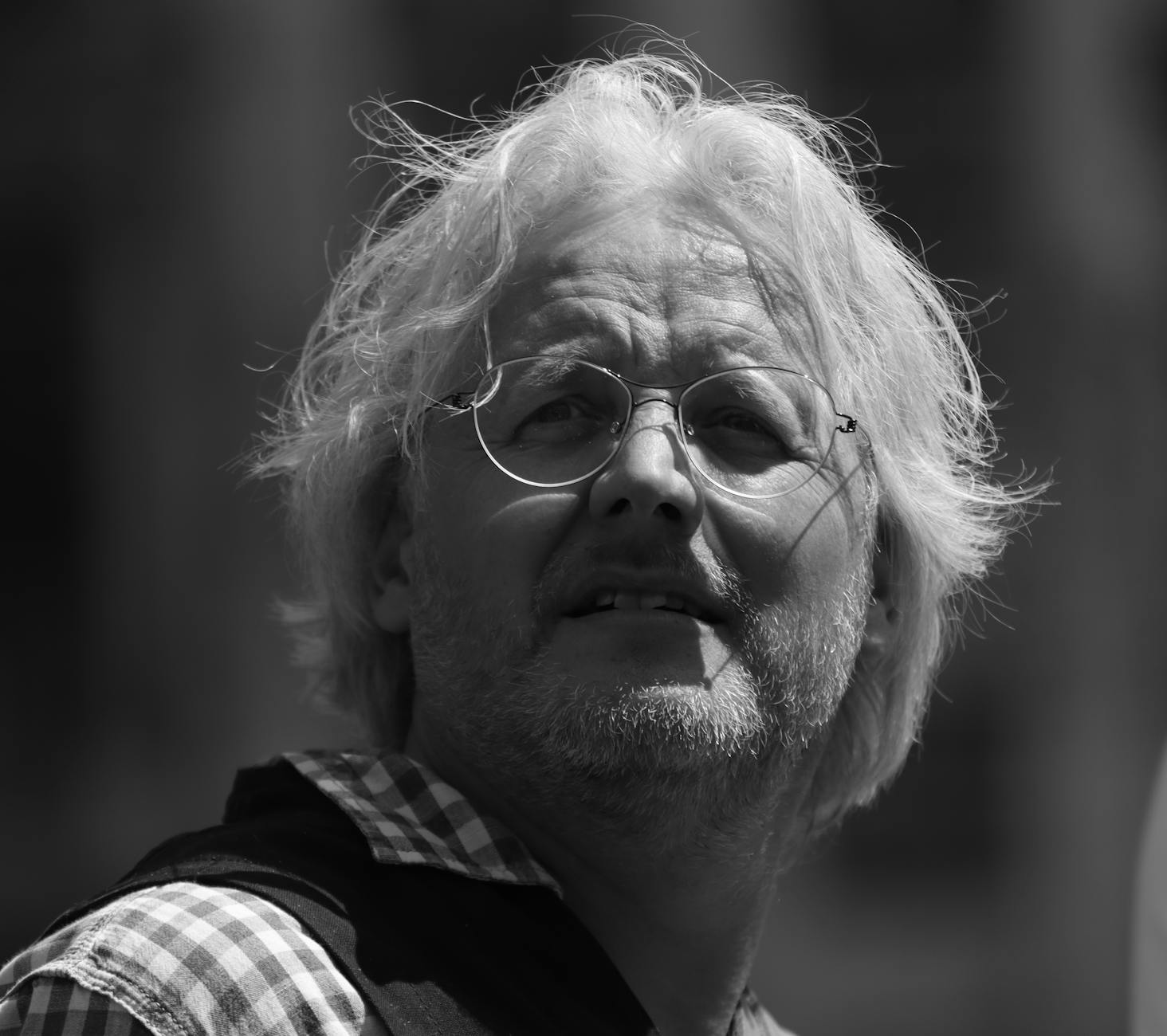
Last spring, I was standing in the park near my house at about 6:45 in the morning. Lottie was doing her usual rounds — sniffing every third tree like she was conducting an audit — and I noticed a man about my age sitting on a bench with binoculars around his neck and a little notebook open on his lap. He wasn’t looking through the binoculars. He was just sitting there, watching the branches of an old maple with his bare eyes, completely still. Then a bird I couldn’t identify landed about ten feet away, and this man’s face changed. Not dramatically. Just — softened. Like something inside him exhaled.
I wanted to ask him what he was looking at, but I didn’t. I recognized the expression. It was the same one I’d caught on my own face in the bathroom mirror about a year after I retired, the first time I realized I’d spent twenty minutes watching snow fall without once checking my phone or thinking about what I should be doing instead.
That man on the bench wasn’t becoming eccentric. He was coming back to life.
The productivity trap doesn’t release you just because you stop working
Here’s what nobody tells you about retirement: the job ends, but the internal taskmaster doesn’t quit. I wrote about this when I first retired at 62 — how the difference between people who sharpen after retirement and those who decline has almost nothing to do with genetics and everything to do with what you choose to do with your attention. But what I didn’t understand back then was that the real battle isn’t about choosing activities. It’s about giving yourself permission to stop justifying every waking moment.
For 35 years, I measured my worth by output. Closed files. Resolved claims. Meetings attended. Even my hobbies during my working years had to produce something — a shelf I built, a fence I repaired, a lawn that looked like I gave a damn. Beauty was fine, but it had better come with a function.
Then I retired, and the silence was terrifying. I’ve been honest about the depression that followed. What I haven’t said enough is that part of that depression came from the fact that I literally didn’t know how to pay attention to something without asking myself what it was for.
Psychologists have a term for what happens when you finally break free of that pattern. They call it soft fascination, and it’s a core component of Attention Restoration Theory, developed by environmental psychologists Rachel and Stephen Kaplan at the University of Michigan. The idea is straightforward: our capacity for directed, effortful attention — the kind that keeps you focused on spreadsheets and deadlines — gets depleted. Nature provides a different kind of attention, one that requires no effort. You watch a bird hop along a branch. You notice the light change on water. Your brain doesn’t have to work. It just receives.
And that receiving, after decades of forced output, feels like rain on cracked earth.
Why birds, specifically?
You could argue that any nature hobby would do the trick, and to some extent that’s true. Gardening, hiking, fishing — they all put you in contact with the natural world. But birding does something particular that other nature activities don’t, and it has to do with the specific cognitive demands it makes.
Birding requires you to be still. To listen. To notice subtle differences — the shape of a wing, a two-note call versus a three-note call, the way one species feeds versus another. It asks for a quality of attention that is alert but unhurried. You can’t rush a bird into appearing. You can’t optimize the process. You have to wait, and watch, and let the world come to you.
For someone who spent three decades in corporate environments, where every meeting had an agenda and every conversation had a deliverable, this is practically revolutionary.
A 2022 study published in Scientific Reports by researchers at King’s College London found that encountering birds in everyday life was consistently associated with improvements in mental well-being — not just in the moment of the encounter, but for hours afterward. The effect held even after controlling for other environmental factors. It wasn’t just being outside. It was the birds themselves. The study used a smartphone-based ecological assessment, tracking real-time mood across hundreds of participants, and the pattern was clear: birds made people feel better, and the effect was lasting.
What kills me about that study is how obvious it should have been, and how long it took us to prove it. My grandmother could have told you that watching birds from her kitchen window made her feel at peace. She just wouldn’t have needed a smartphone app to confirm it.
Permission is the thing nobody talks about
Here’s the part that really gets me. When a 63-year-old man starts spending his mornings with binoculars and a field guide, his family often treats it like a quirk. A charming little hobby. Maybe a sign he’s slowing down. What they don’t understand is that this man is doing something he may not have done since childhood: paying attention to beauty for absolutely no productive reason.
And that takes courage.
We don’t talk about the courage involved in becoming useless on purpose. After a lifetime of being valued for what you produce, choosing to sit on a bench and watch a cedar waxwing eat berries is an act of quiet defiance. You’re saying: my attention belongs to me now. I don’t owe it to anyone’s bottom line. I’m going to spend it on something that gives me nothing back except the feeling of being alive.
I’ve written before about how people with high intuitive intelligence often get mislabeled as oversensitive or indecisive, when really they’re processing more than the people judging them. Something similar happens with retirees who fall into birding. Their families see eccentricity. What’s actually happening is a person relearning how to process the world without a filter of utility.
Psychologist Abraham Maslow wrote about what he called peak experiences — moments of profound wonder and connection that transcend ordinary consciousness. He believed these experiences were essential to psychological health and that most adults had trained themselves out of having them. Maslow’s research on peak experiences suggested that self-actualizing individuals didn’t seek these moments through extraordinary means. They found them in ordinary life — in nature, in music, in quiet attention to the world around them.
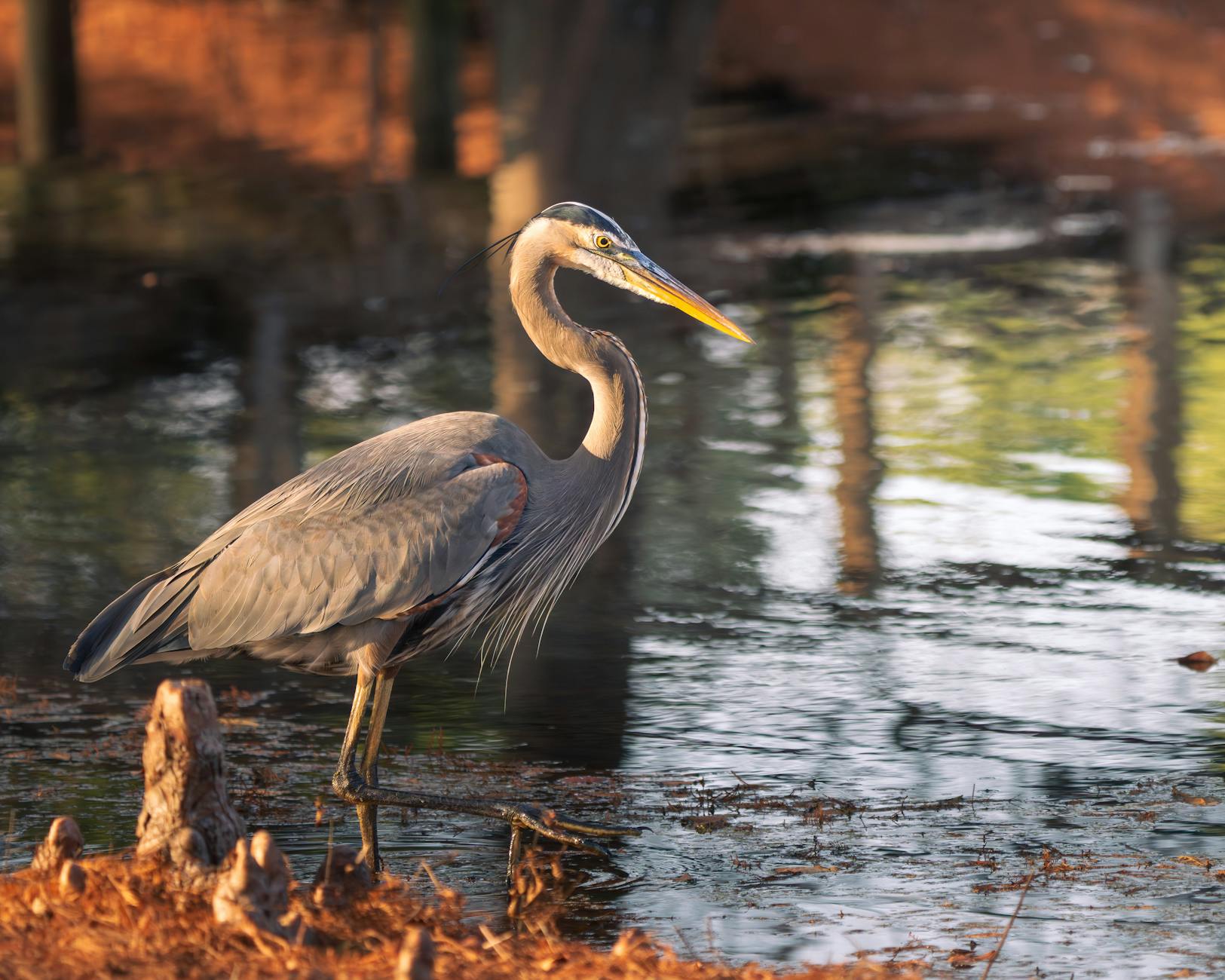
A retiree watching a heron stand motionless in a pond is not becoming eccentric. They’re becoming, possibly for the first time in decades, psychologically whole.
What my body already knew
I’m not a birder. I should say that. I don’t own binoculars, and I couldn’t tell you the difference between a house finch and a purple finch if my life depended on it. But I understand the impulse completely, because something similar happened to me with woodworking after I retired.
The first time I spent an afternoon sanding a piece of walnut — no plan, no project, just feeling the grain under my hands — I felt something shift in my chest. Not dramatic. Not spiritual, exactly. More like a door opening into a room I’d locked up decades ago. The room where paying attention to the texture of a thing was enough. Where the smell of wood shavings didn’t have to justify itself.
I think about what it means that my body wakes me at 6:15 every morning without an alarm — how a body that keeps its own time trusts the mind running it. Something like that happens when you start noticing beauty without the productivity filter. Your body starts trusting your mind again. Your nervous system unclenches in a way it hasn’t since you were a child lying in grass, watching clouds.
A 2017 study in the Journal of Environmental Psychology found that experiences of awe in nature — even brief ones — led to measurable reductions in pro-inflammatory cytokines. Not metaphorical inflammation. Actual, biological inflammation. The kind linked to chronic disease, depression, and cognitive decline. Looking at something beautiful and letting it move you is, quite literally, medicine.
The thing about eccentricity
My father worked double shifts at a factory in Ohio. He never watched birds. He barely sat down. The idea that a man could spend a morning doing nothing productive and still call it a good day would have bewildered him. Not because he didn’t appreciate beauty — I remember him standing at the back door once, watching a thunderstorm roll in, completely silent — but because his life never gave him permission to dwell in it.
That’s the thing about the generation before mine. And honestly, about most of my generation too. We were trained to feel guilty about unproductive attention. A sunset was fine if you were already doing something useful and happened to look up. But going outside specifically to watch one? That was for poets and people without mortgages.
When I see retirees picking up birding, I see people breaking that chain. And I think the people who call it eccentric are the ones who haven’t broken it yet.
I’ve noticed that the deepest empathy often shows up in people who spend real time in solitude, not because they’re avoiding others, but because they’ve learned to sit with themselves. Birders do this instinctively. They go out alone or in small, quiet groups. They practice patience. They let the world reveal itself on its own schedule. And in doing so, they develop a kind of attention that makes them better partners, better grandparents, better friends.
What I think it actually is
I think what happens when someone picks up birding after 60 is something both simpler and more profound than we realize. It’s not a hobby. It’s a homecoming.
Somewhere around age 12 or 13, most of us stopped paying attention to the natural world for its own sake. We started looking at everything through the lens of utility. School trained it into us. Work cemented it. And then one day, decades later, you’re standing in a park at dawn, and a bird you’ve never noticed before lands on a branch, and something inside you recognizes it — not the bird, but the feeling. The feeling of being a kid lying on your stomach in the grass, watching ants, completely absorbed, needing nothing else.
That’s not cognitive decline. That’s cognitive and emotional restoration. That’s your brain, after sixty-plus years of output, finally being allowed to receive.
This morning I walked Lottie in the usual park. The man with the binoculars wasn’t there, but I stopped at his bench anyway. Sat down. Looked up. There were birds everywhere — sparrows, a blue jay, something small and brown I couldn’t name. I watched them for about ten minutes, and I didn’t once reach for my phone or think about what I should be writing.
It wasn’t productive. It wasn’t useful. It was just beautiful.
That was enough.