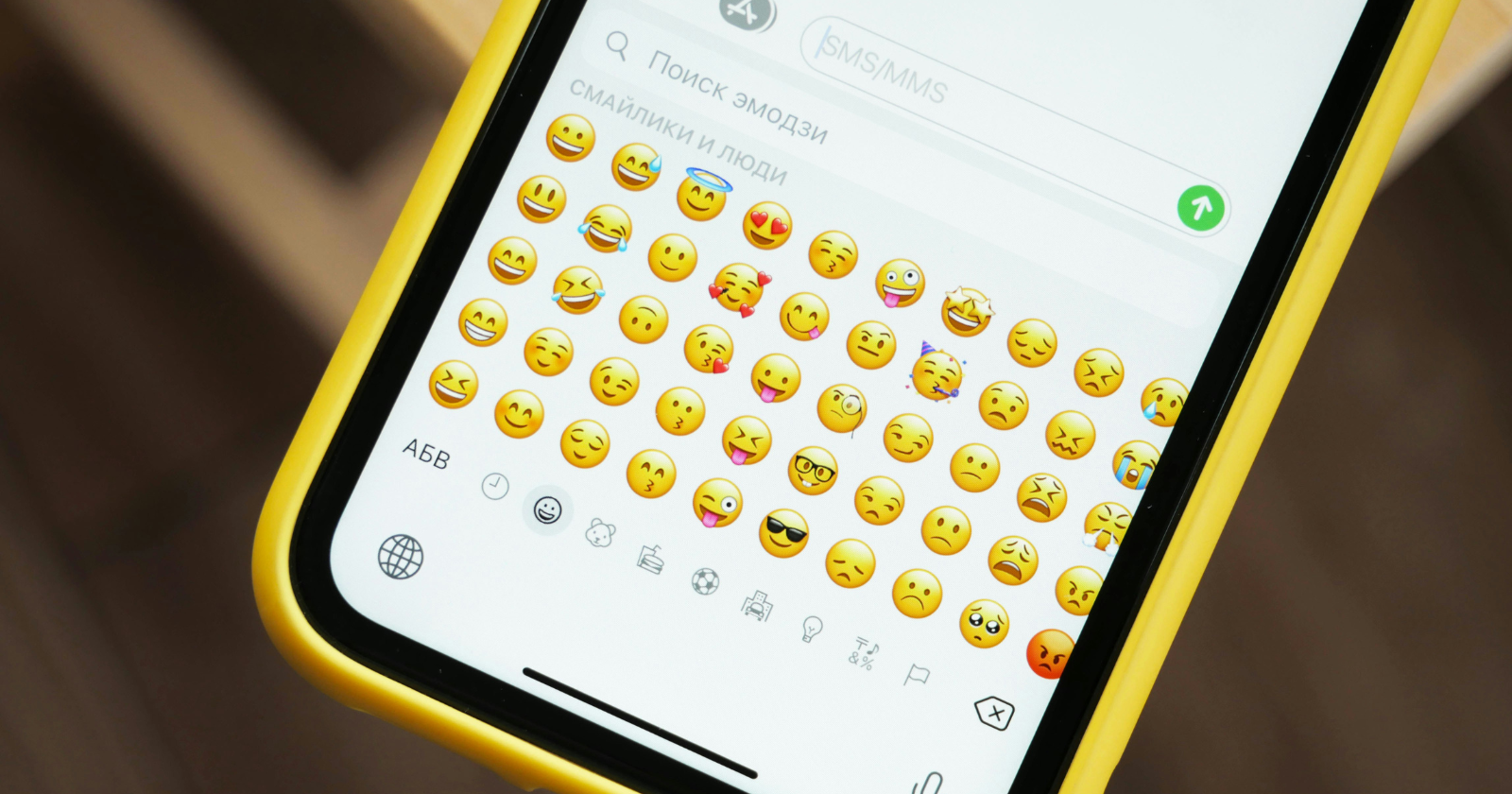
Sixty-nine percent. That is the share of U.S. emoji users in Adobe’s 2022 survey who said emoji use at work positively affects likability. Adobe surveyed 5,000 U.S. emoji users, so the result should not be generalized to all workers.
It is a striking self-reported perception. Adobe also proposed that emoji can help replace tone and other cues missing from written communication, but the survey did not test that explanation as the cause of the likability response.
Here’s what the data, and the research sitting underneath it, actually says about why a small colored icon can move the needle on how a coworker gets perceived, and where that effect is strongest.
The number is about likability, not warmth
Adobe introduced the workplace figures by discussing remote colleagues who may not have met in person. The published summary reports that 68% liked workplace emoji use, 69% said it positively affects likability, and 59% said it positively affects credibility. It does not report those percentages as a separate subgroup analysis of coworkers who had never met.
It’s also worth being precise about what was actually measured. This is a self-report survey, workers describing their own impressions, not an independent test of who actually got promoted or befriended more often. That doesn’t make the number meaningless, but it does mean the finding is about perception, not about a measured change in how anyone was treated.
Adobe’s own explanation names body language directly
Kamile Demir, a computer scientist at Adobe and the company’s representative on the Unicode Emoji Subcommittee, connected the finding to hybrid work specifically rather than to friendliness in general. “One of the challenges of hybrid work is that it can be harder to interpret written communication from our coworkers without that face to face interaction,” Demir said in the report. “Emoji are a great way to mitigate potential misunderstandings,” she added. “A quick smiley face on the end of your message can go a long way.”
Notice what’s missing from that explanation: any claim that emoji make someone seem warmer as a person. The claim is narrower and more mechanical than that. Emoji are filling in for tone of voice and facial expression, the two things a coworker in the next room gets for free and a coworker on a chat thread does not get at all.
Researchers have called emoji “quasi-nonverbal cues” for almost two decades
This isn’t an idea Adobe stumbled onto in 2022. Shao-Kang Lo studied a version of the same question in a 2008 paper for CyberPsychology & Behavior, years before hybrid work was a common phrase. Lo’s paper predates the pictographic emoji most people picture today. His subjects were using text-based emoticons, symbols like a colon and a parenthesis read sideways as a smile, rather than the small illustrated icons built into modern keyboards. The underlying function he described still carries over cleanly to the newer symbols.
Lo’s study starts from the same observation Adobe’s report leans on decades later: “Most past studies assume that computer-mediated communication (CMC) lacks nonverbal communication cues. However, Internet users have devised and learned to use emoticons to assist their communications.” His conclusion gave the pattern a name: “This study examined emoticons as a communication tool that, although presented as verbal cues, perform nonverbal communication functions. We therefore termed emoticons quasi-nonverbal cues.”
A quasi-nonverbal cue is not a substitute for warmth. It’s a substitute for the raised eyebrow, the half-smile, the tone shift that tells a listener a comment was a joke and not a jab. Text strips all of that out, and an emoji is one of the few tools available to put a rough version of it back in.
Credibility rose too, and that’s the more surprising number
Adobe also reported that 59% said workplace emoji use positively affects credibility. That is not a 59% increase in measured credibility; it is the share of surveyed emoji users who selected a positive response.
Put the three numbers side by side and a pattern shows up. Sixty-eight percent said they simply like seeing emoji at work. Sixty-nine percent said it affects likability. Fifty-nine percent said it affects credibility. All three move together, which fits one underlying cause, a missing channel of information, better than it fits three separate and unrelated reactions to a smiley face.
Why the proposed mechanism may matter in remote work
Adobe framed the result around remote and hybrid work, where tone and facial expression may be missing. That makes the body-language explanation plausible, but the report did not compare coworkers who had met with those who had not, so it cannot show that the effect is largest in one group.
That also suggests the effect should fade as a working relationship matures. Once two coworkers have enough shared history to read each other’s tone from context alone, an emoji stops doing rescue work and starts being just decoration.
Matching the tool to what’s missing beats just using more of it
None of this argues for sprinkling emoji into every message. The data and the research both point to a narrower rule: emoji help most exactly where in-person cues are absent, and they add little where those cues are already available through a shared history or a face-to-face relationship. A message to someone you talk to in person every day doesn’t need an emoji to soften it, because the tone is already coming through some other channel. A message to a coworker you’ve never met in person is missing something real, and a small icon is a reasonable, well-studied way to fill part of that gap.