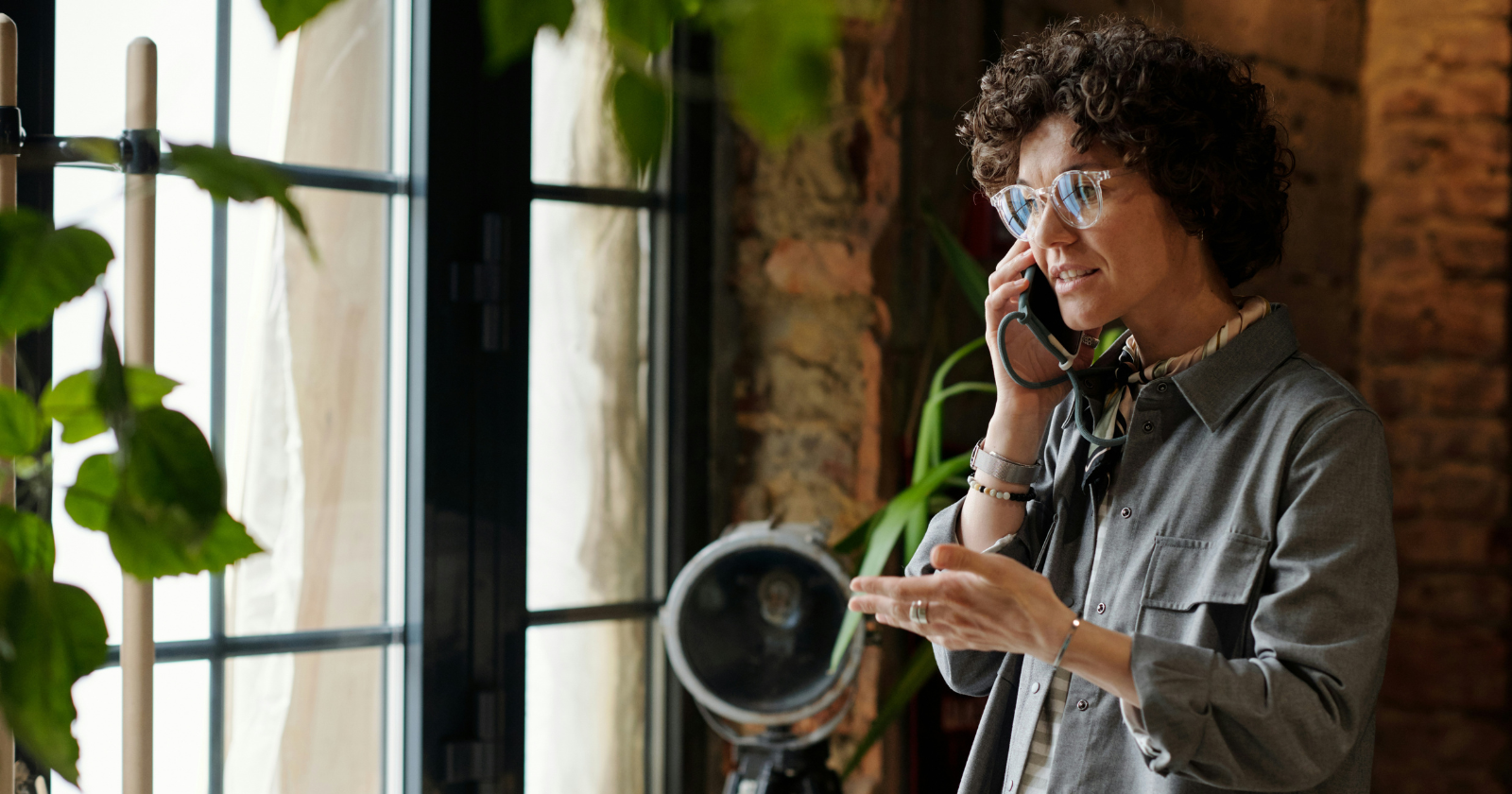
Picture someone pacing a living room, phone pressed to one ear, free hand tracing shapes in the air that nobody on the other end will ever see. A pen gets picked up and clicked shut, over and over. A foot taps under a desk, a loose thread gets wound around a finger and released, wound and released again. By the time the call reaches its point, a full loop of the block has already happened, sometimes two.

Put that same person across a coffee table for the identical conversation, face to face, and something changes. The pacing stops. The hands settle into ordinary, occasional gestures instead of restless ones. The only thing missing is the voice-only format, and yet the whole body behaves differently. That difference is worth taking seriously instead of writing off as nerves or a short attention span.

What the hands are actually doing

Hand movement during speech isn’t decoration layered on top of talking. A 2020 research review in Frontiers in Human Neuroscience lays out decades of evidence that gesture is tightly wired into how people produce and organize speech, not just how they decorate it. People gesture while talking on the phone even though the other person can’t see it, and blind speakers gesture to blind listeners who have never seen a gesture in their lives. Neither group is performing for an audience. Something about moving the hands appears to help the words come out.

One explanation researchers point to is the Lexical Retrieval Hypothesis, which proposes that gesture primes the brain in a way that makes specific words easier to reach. There’s supporting evidence for this too: when people are stopped from gesturing mid-sentence, they pause more, stumble more, and slow down. Gesture also appears to lighten the mental load of holding an idea together while speaking, freeing up capacity that would otherwise go toward the physical act of finding words. For people who lean on this system more than others, moving works more like part of the machinery of thought than a side effect of it.

The channel that voice-only removes

A phone call doesn’t just remove pictures. It removes half of a two-way system that people who think this way depend on in both directions: producing gesture themselves, and reading it on the person they’re talking to. The same research review points to work on adult language learners, who understood lecture material significantly better when they could see a teacher’s face and gestures compared with hearing the identical words as audio only. Meaning was traveling through a channel that audio simply doesn’t carry.

Psychologist Susan Goldin-Meadow, who has spent much of her career studying the link between gesture and cognition, put it plainly: “It’s hard to gesture when you’re holding your smartphone.” Video calling, she’s noted, keeps at least some of that channel open, since the hands can still be seen even if the two people are miles apart. A voice-only call closes it completely. What remains is a body that still wants to work the way it always has, with nothing left to work on.

Restlessness as a stand-in, not a distraction

This isn’t limited to hand gestures specifically. Pacing, tapping, doodling, and other small repetitive movements belong to a broader category researchers call fidgeting, and some of the clearest evidence for what it’s doing comes from research on attention. Julie Schweitzer, a professor at the UC Davis MIND Institute who has studied fidgeting for years, has found it often shows up in specific mental states, including “when they’re stressed, anxious or excited, or even intensely thinking.” Her research isn’t about phone calls specifically, and the fidgeting-attention link has mostly been studied in the context of ADHD rather than the general population, so it shouldn’t be read as a diagnosis of anyone who fidgets on a call. What it does suggest is that movement and concentrated thought are more connected than the tidy image of a still, focused listener would imply.

Put those two threads together and the restlessness on a voice-only call starts to look less like fidgety distraction and more like a body trying to substitute for a channel that just got cut off. The movement doesn’t fully replace what a shared visual space would offer, but it’s the closest thing available.

What actually helps

None of this means voice-only calls are a problem to be solved. Plenty of conversations don’t need the full bandwidth of gesture and expression to land, and a quick check-in or a routine update usually works fine over audio alone. But for a conversation that genuinely requires working something out, whether that’s a complicated decision, a piece of bad news, or a knot of an idea that hasn’t taken shape yet, the format is worth choosing on purpose rather than by default.

Letting the pacing happen instead of fighting it is one option, since suppressing that movement can cost more focus than it saves. A standing desk, a hallway, or even just permission to get up mid-call can matter more than it sounds like it should. Switching to video for anything that actually needs working through, so both people’s hands and faces are back in the picture, is another option worth defaulting to when the stakes are real. And for the person who always seems to be moving during a call, it’s worth extending them the same patience given to someone thinking out loud, because that’s most likely exactly what’s happening.

Final thoughts

The next time a phone call turns someone into a pacer, a tapper, or a doodler, that motion is worth reading as concentration rather than distraction. Most likely, a body is still trying to do its part of the thinking, using whatever room it can find once the visual half of the conversation has been taken away. Given a screen, or a room, or simply permission to move, it would probably be doing the same work more efficiently than it can over a voice alone.