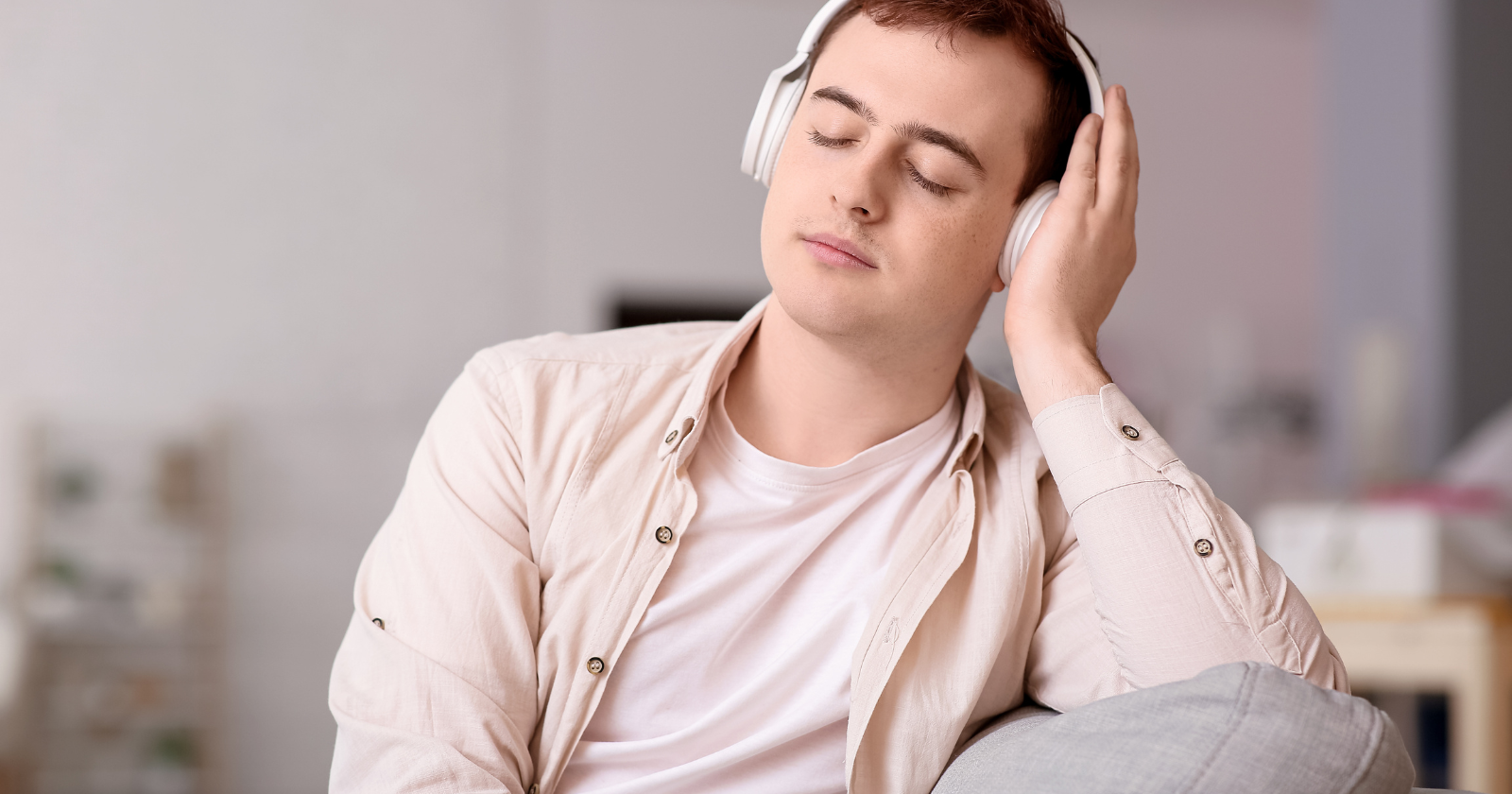
Picture the average audiobook listener today, and the picture is not someone curled in a chair with nothing else to do.
It is a commuter with a thriller playing through the car speakers, someone folding washing with a memoir running in one ear, a dog-walker moving through a chapter of nonfiction at footpath pace.
The physical act most people associate with reading, eyes fixed on a page, one sentence following the last in a stretch of stillness, has almost nothing to do with what most audiobook listeners are actually doing while they listen. The industry that tracks this closely treats that gap as the whole story.
A market that has not had a down year since 2012
US audiobook publishers reported $2.43 billion in sales revenue for 2025, up 9% on the year before, according to the Audio Publishers Association’s own sales and consumer survey, released in June 2026 and conducted by Toluna and Edison Research. That figure sits at the end of a long run rather than the start of one.
The APA’s 2022 report marked eleven consecutive years of double-digit revenue growth, a streak stretching back to 2012. The pace then eased: 2023 came in at 9%, breaking the double-digit run, as Publishing Perspectives reported when the 2024 survey results came out. Growth then jumped back to 13% the following year before settling again at 9% for 2025. What has not happened, in any of those years, is a decline. Whatever the rate, US audiobook revenue has risen every single year for more than a decade.
The 2026 survey adds a scale marker to that trend: 58% of Americans aged 18 and over have now listened to an audiobook, an estimated 157 million people. Digital audio accounts for the vast majority of that revenue, and publishers reported more than 750,000 active titles on the market in 2025, a 43% jump from the year before. Whatever is happening with audiobooks, it is not a niche habit sustaining itself on a small base. It is a mainstream format that keeps adding readers, or listeners, depending on which word one is prepared to use for them.
Who is actually doing the listening
The APA’s consumer data points to why the format keeps growing, and the reasons are practical rather than literary. Listeners cite the ability to multitask (86%) and to listen on the go (84%) as the top benefits of audiobooks, and seven in ten treat them as an alternative to screen time.
The average listener gets through 3.8 titles a year, using a mix of subscriptions, library apps, purchases, and other services. The survey also found that multitasking and listening on the go were commonly reported benefits.
Those responses suggest audiobooks can bring books into commutes, chores, and walks. They do not show whether a listener would otherwise have read a print or electronic book, so the survey cannot establish that audio only adds reading rather than sometimes replacing another format.
The question nobody quite agrees on
That distinction matters because a meaningful share of the public still does not accept that audiobook listening is reading at all. An NPR-Ipsos poll cited in NPR’s reporting on the debate, broadcast in July 2025, found that 40% of American adults believe listening to an audiobook is not a form of reading, not a majority, but not a fringe view either. Ipsos’s Mallory Newell noted that the people most likely to hold that view skew older, male, and less likely to hold a four-year degree. That is a real split in how a culture defines a basic term, playing out at the same time as the format itself keeps expanding. Sales growth and definitional agreement are moving in opposite directions.
What the comprehension research actually shows
The science on this is more settled than the public debate suggests, at least for adult readers. Beth Rogowsky, Barbara Calhoun, and Paula Tallal’s 2016 study in SAGE Open assigned adults to read a nonfiction text on an e-reader, listen to the audiobook version, or do both at once, then tested comprehension. The result: no statistically significant difference between the three groups, either immediately afterward or on a delayed test. People retained roughly the same amount of information whichever way they took it in.
The finding comes with a real limit, and it is worth stating rather than smoothing over. Rogowsky’s later research on school-age children found that students who identified as auditory learners performed worse across the board, worse at recalling and understanding material whether it was read to them or read by them. Her conclusion was that children still learning to read need the actual practice of reading, not a workaround that skips it. The equivalence between reading and listening holds for people who are already fluent readers. It does not extend to the process of becoming one.
Where the two forms genuinely diverge
Even among fluent adult readers, the formats are not interchangeable in every respect, and treating them as identical understates what each does well. Cognitive scientist Daniel Willingham, writing on the question of whether audiobooks amount to “cheating”, points out that a narrator’s inflection carries information a silent page cannot, sarcasm, emphasis, the rhythm of a sentence as its author intended it to be heard, all delivered automatically through a trained voice. Print, in turn, gives the reader control that audio withholds: the ability to set pace, to stop, to flick back three pages and reread a paragraph that did not land the first time. For dense argument or intricate plotting, that control matters more than it does for a straightforward narrative told well.
This is where the distinction becomes an editorial one rather than a purely academic one. A manuscript written with only the printed page in mind can still ask a lot of a narrator and a listener, long parenthetical asides that work fine on paper, where the eye can hold the sentence’s shape, turn ambiguous the moment they are read aloud at a fixed pace with no visual cue for where the aside ends. Punctuation that a silent reader glides past becomes, in a narrator’s mouth, an actual pause, an actual breath. Editing for a book that will likely be heard as often as it is read means paying attention to how a sentence sounds when someone else says it in one direction only, with no chance to go back.
None of this settles whether listening “counts” as reading, and the market data cannot determine whether audio supplements or replaces print for a particular listener. What it does show is sustained revenue growth and a format valued for portability and multitasking. The commuter, the person folding washing, and the dog-walker are examples of contexts audio can fill, not proof of what those listeners would have done without it.